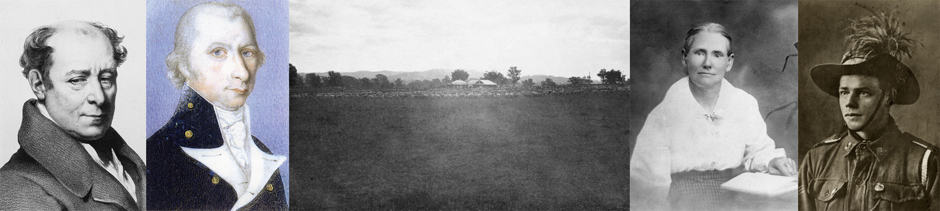
Mount Wellington and Hobart Town from Kangaroo Point by John Glover
On the Lockyer side, Edmund Henry Seppings’ extended family branched, through marriage, into the Freestun family. Most of the Freestun boys joined the military, and William Freestun became a ‘Sir’. Brothers Edward and Charles left London and sailed to Australia arriving in Hobart Town, Van Diemen’s Land, on 20 March 1830, where they stayed.
The Tasmanian Aboriginal people, the Palawa, have lived in Tasmania for around 40,000 years. For them, Tasmania was and is known as Lutruwita. Mount Wellington is known as Kunanyi in the Palawa kani language. Hobart’s other name is Nipaluna.
William Lockyer (b.1738) was Edmund Henry’s great uncle; his grandfather Thomas Lockyer’s brother. William’s daughter Mary, who married into the Freestun family, was Edmund’s 1st cousin once removed. Her children were his second cousins.
Lockyer – Freestun

Quays, Waterford, Ireland
William Lockyer (b.1738), a merchant in Plymouth, then a Comptroller of Customs, Dublin, married Mary of Exeter in Ireland. Their daughter Mary Lockyer, born in May Park, County Waterford, married Edward Freestun (1764-1828) on 21 Sep 1788 at the Church of Ireland Cathedral, Waterford. Edward was a customs officer in Waterford and they lived at Primrose Hill, Tramore. Mary and Edward had eight children in 11 years, in Waterford: Catherine Emma Freestun (1793-1855), Humphrey May Freestun (1794-1863), Edward Lockyer Freestun (1802-1857), Maria Freestun (1803-1821), Charles Lockyer Freestun (1804-1879), and William Humphrey Lockyer Freestun (1804-1862). They had another two children who died close together on 14 and 27 December 1796, with no details other than ‘child of Edward Freestone’.
Mary died on 4 April 1821, and was buried in Waterford. Her daughter Maria, just under the age of 18, died shortly after on the 13th.
2nd Cousins –
Catherine Emma Freestun (1793-1855) born in Waterford, Ireland, in 1793, married George Allen in 1828 in Dublin, and they lived on Isle of Man. She died there 14 Mar 1855.

Combe Grove, Bath, Somerset
Cpt Humphrey May Freestun Esq (1794-1863), born in Waterford, Ireland, in 1794, served in the Royal Navy from 1803, from the age of eight, as a 1st Class Volunteer. He was made a lieutenant in 1812, reaching the rank of Captain and Commander. Humphrey returned home, age 19, an invalid.
On 21 Oct 1820, Humphrey married Caroline Elizabeth Golding (b. 1794/7), a widow and wealthy heiress, in St Marylebone, Middlesex. Caroline, daughter of Benjamin Golding, was born in Priston, near Bath, Somerset, and had a previous marriage to William Vaughan (1750-1818) when she was 14 years old on 2 Jan 1811. William became High Sheriff of Somerset in 1812.
William Vaughan inherited the estate of Combe Grove, Monkton Combe – a village in north Somerset, three miles south of Bath, in 1810. His father, James Vaughan, acquired the property following the death of his brother-in-law in 1798. William Davies, the Agent Victualler of Gibraltar, bought the Combe Grove estate which included the village of Monkton Combe, in 1782, but he and Elizabeth Jenkins had no children.
William and Caroline had four children: William Jenkins Vaughan (1813-1876), Caroline Vaughan, who died at 14 weeks in 1812, Edward Jenkins Vaughan (1815-1836) who died aged 21, and Frederick Jenkins Vaughan (1817-1892). The first three children were born in Combe Down, while Frederick was born at Combe Grove. The Jenkins Vaughan family retained ownership of Combe Grove until 1968.
After William Vaughan died in 1818, Caroline remarried, to Humphrey May Freestun (1790-1863). Caroline and Humphrey had one child, May Jenkins Freestun (1821-1888), born in Lyndhurst, Hampshire, and baptised in 1822 at St. Pauls, Bristol, Gloucester.
On 1 Oct 1832, Humphrey was declared bankrupt as a ‘chapman and dealer’.
In the 1841 Census, Humphrey Freestun, age 45, with Elizabeth Golding, age 85, May Freestun, age 20, and Frederick Vaughan, age 22 were residing at Combe Grove. Caroline died on 13 May 1857, and Humphrey on 30 September 1863, both in Monkton Combe, Somerset.
A portrait of Captain Humphrey May Freestun, wearing uniform and naval medal, was painted, an oil on canvas, by J C Miles in 1849.
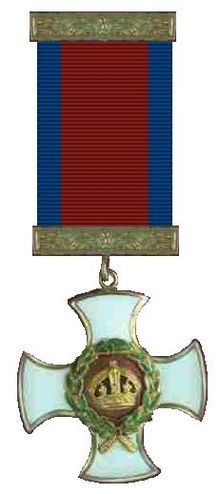
The Distinguished Service Order (DSO) is a British military medal awarded to officers for meritorious or distinguished service during wartime.
Edward Lockyer Freestun (1802-1857), born in Waterford, Ireland, moved with his brother Charles to Tasmania, Australia, in 1830. Four years after arriving in the colony, Edward was appointed Police Constable at Ross, within the Campbell Town Police District, during the construction of the Ross Bridge over the Macquarie River. Now the third-oldest bridge still in use in Australia, it was built from locally quarried sandstone. At the time, however, much of the assigned convict labour was being diverted to work for local pastoralists rather than on the bridge itself. Edward, who was also appointed Stock Inspector, was tasked with putting a stop to the practice.
‘On Christmas day the men were drinking in the local inn, against regulations, and Edward, accompanied by three constables directed them to leave. They refused, and one threw a pint pot at Edward, who then attempted to apprehend the thrower. All the men descended on the police and threw them out bodily. Edward called for military support. The bridge gang supervisor arrived and the men went back to their quarters peacefully. They were duly arraigned before the magistrate and convicted. Of the twenty-three men charged, many spent the next three years at Port Arthur. Edward lost his job.’*1
The bridge was completed in 1836.
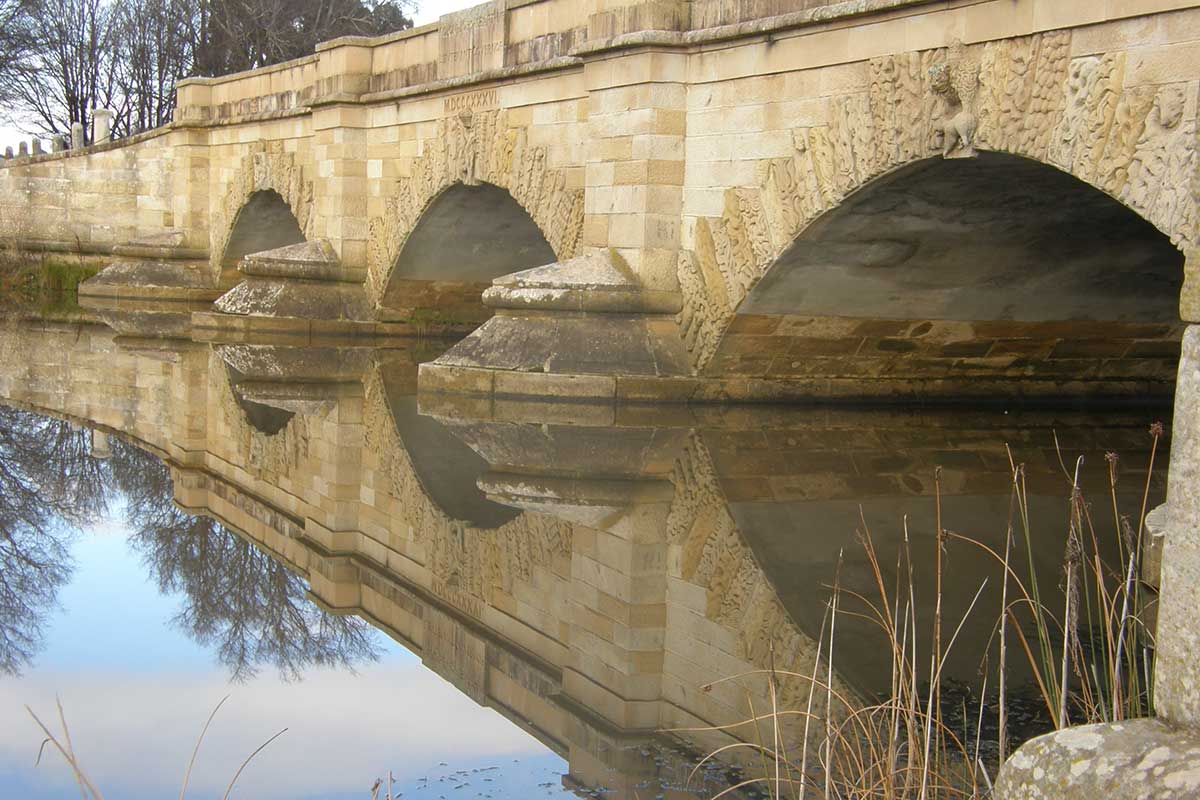
Ross Bridge, Tasmania
By 1836, Edward had travelled to Victoria, where he was employed as a shepherd near the Yarra River by Hobart banker and pastoralist Captain Swanston. After giving evidence in court concerning the death of an Aboriginal man, Edward was appointed as a constable to act as liaison between the Melbourne Police and the commander of the newly formed Native Police Unit. He was subsequently made a constable in the Melbourne Police, to patrol licensed premises, but was dismissed in 1838. He then moved to South Australia, where he joined the newly established police force. Appointed as a mounted corporal, he served for a year before his engagement was terminated.
On 3 January 1842, in Adelaide, Edward married Caroline (Catherine) Miller (1810-1884) from Gawler, SA. The marriage certificate reveals he was farming at Willunga. After the birth of their first child, they moved to Gawler where his sister-in-law was married to a prospering farmer. Edward worked as a labourer and later ‘proprietor’. They had six children: Caroline Vahn Freestun (1843–1892), Kater Florence Freestun (b. 1845), Edward Lockyer Freestun (1849–1884), David William Freestun (1851–1928), and Maria Freestun (1855–1931).
Edward died on 11 April 1857 in Gawler, at the age of 55, and was buried in Adelaide. His children ranged from ages of two to thirteen years and Caroline had to care for them on her own.

View of Hobart Town, Van Diemens Land by J Lycett 1827
Charles Lockyer Freestun (1804-1879) born in Waterford, Ireland, moved with his brother Edward to Tasmania, Australia, in 1830. He arrived in Hobart then made his way to Launceston. European settlement began there in 1804 when HMS Buffalo ran aground at the mouth of the Tamar River. A camp was established, later known as George Town, one of the earliest European settlements in Australia. From the 1830s, George Town became a port which traded with the colony of Victoria. There was a military garrison, convict settlement, and a female factory.
Appointed Chief Constable at Georgetown on the personal recommendation of the District Magistrate, Charles held the position for ten years. Although Lieutenant-Governor Arthur expressed reservations about Charles’s lack of experience, he reluctantly approved the appointment. During his tenure, Charles was charged and convicted of a breach of duty by the court in Launceston. However, upon learning of the conviction, the District Magistrate intervened and appealed to the Lieutenant-Governor, who subsequently quashed the conviction.
On 9 March 1833, Charles married Elizabeth Davis (1808-1841) in St John’s Church, Launceston. Elizabeth arrived as a convict on the ship Borneo five years earlier. They had five children, but only two survived infancy: Charles May Freestun (1834–1898) and Elizabeth Freestun (1836–1839) who was run over by a bullock-cart at the age of two.
Charles was ostracised by his family after marrying a convict—a fact that remained hidden for over a century, only coming to light through the research of one of his descendants.
‘Charles had between five and seven constables at the station, mainly convicts. Much of his time seems to have been spent in court as Prosecuting Officer charging persons with keeping dogs, with harbouring escaped convicts, with supplying liquor to convicts, and investigating charges of theft by convicts from their employers.’ *2
In 1835, after the District Magistrate was transferred to Hobart. Three years later, Charles lost his job. In 1841, Elizabeth, died in a hotel room awaiting the birth of a child. ‘The coronial enquiry found that she died of an excessive consumption of alcohol and it appears that she had been a heavy drinker for some years.’ *3
At the age of 37, widowed and out of work with a six-year-old son to support, Charles sold the cottage he had bought from the magistrate, and rented a small cottage, working as a boatman at George Town.
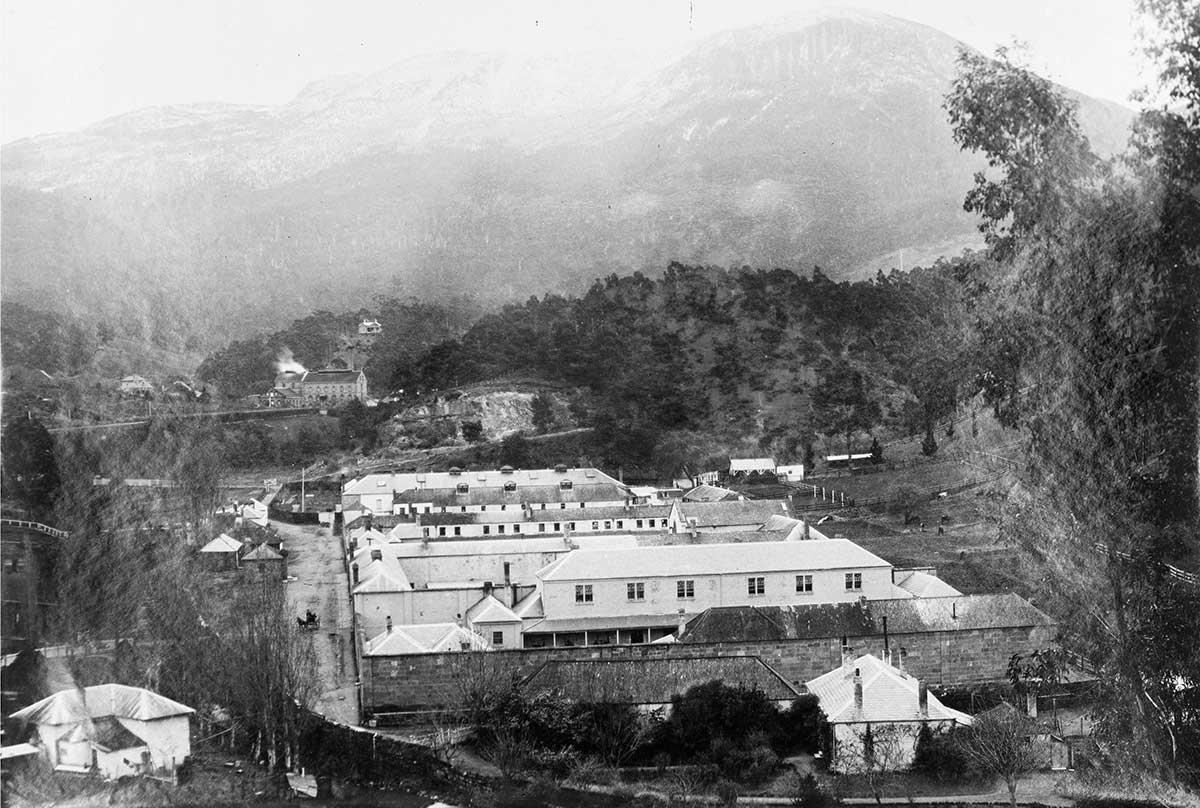
Between 1814-42, 5,500 female convicts arrived in the colony, mostly for petty theft. Women who misbehaved, got pregnant or were waiting to be assigned work were sent to female factories such as the Cascades Female Factory located in a cold, swampy valley upstream from Hobart.
Lt Col Sir William Humphrey Lockyer Freestun
Lt Col Sir William Humphrey Lockyer Freestun KCT, KBE, KHS (1804–1862) was a distinguished soldier, parliamentarian, and public servant. Born in Waterford, Ireland, he began his military career as an ensign in the 5th Regiment of Foot (Northumberland Fusiliers), serving with distinction for 23 years.
In the mid-1830s, Freestun joined the staff of the British Legion under Sir de Lacy Evans during the First Carlist War in Spain (1835–1837). His service there earned him the rank of colonel and saw him wounded three times. For his valour, he was honoured with several Spanish decorations: the Order of Charles III (Knight Commander), and the first class of both the Orders of San Fernando and Isabella the Catholic.
He later served in Syria during the 1840–42 campaign as Assistant Adjutant-General, with the local rank of Major, and was presented with a gold medal by the Sultan for his service. During a visit to Jerusalem in 1841, he was admitted as a Knight of the Holy Sepulchre.
Freestun entered political life as a Whig and was elected Member of Parliament for Weymouth and Melcombe Regis in 1847. He held the seat for 12 years, aligning with the Liberal interest in later elections, though he was defeated in 1859. In recognition of his contributions, he was knighted in 1860.
A respected figure in local government, he served as a Deputy Lieutenant and Justice of the Peace for Dorset. In 1846, he married Josefa Benita, the widow of Charles Pratt, Esq., of Totton House, Hampshire, and the Belvidere, Weymouth.
Sir William died in 1862 at his residence in Gloucester Square, Hyde Park, aged 57.

Damascus, Syria.
In 1840–42, Britain was involved in Syria as part of a European intervention to resolve the conflict between the Ottoman Empire and Muhammad Ali of Egypt who had seized control of Syria. Britain, along with Austria, Russia, and Prussia, formed an alliance with the Ottoman Sultan against Muhammad Ali. The British, as a naval power, bombarded Acre, a key Egyptian stronghold, and British forces occupied Beirut and other Syrian coastal areas.
2nd Cousins Once Removed –
May Jenkins Freestun (1821-1888) married Anna Stone (1818-1870) in Winsley, Salisbury,Wiltshire, on 13 July 1852. They had one son: Edward William Freestun (1853-1871) in Bradford on Avon, Wiltshire.
May Jenkins Freestun then married Eleanor Anne Washbourne Gibbs (1843-1929) in Bath, Somerset, in December 1877 when he was 56 years old. They had William Humphrey May Freestun (1878-1964) in Monkton Combe, Somerset.
Charles May Freestun (1834–1898) married Kate Doyle (1852–1918) in Townsville, Qld, 1874. Charles learned to be a ship’s carpenter with his father at George Town, Tasmania, before heading to Far North Queensland’s goldfields. In the 1870s, Charles returned with wife Kate and family to care for his father until his death at age of 75 on 4 November 1879, in George Town, where he was buried. They then resumed life in Queensland, where Charles and Kate had a large family, before returning to Georgetown for his final years.
They had 11 children, two of whom died in infancy: Edward Charles Freestun (1874-1957) was born in Cooktown, died in Charters Towers; John Patrick Freestun (1876-1936) born in Cooktown, died in Brisbane; Alfred Palmer Freestun (1877-1961) born in Butchers Creek, died in Charters Towers; William Lockyer Freestun (1880-1906) born in Lefroy, Tasmania, died in Chillagoe, Qld; Thomas Lefroy Freestun (1883-1931) born in Lefroy, Tasmania, died in Brisbane; Allen Victor Freestun (1883-1948) born in Lefroy, Tasmania, died in Charters Towers; Rose Mary Freestun (1887-1948) born and died in Queensland, Annie Maria Freestun (1889-1894) born in Capeville, Qld, died in Charters Towers; Kate Freestun (1891-1972) born in Capeville, Qld, died in Brisbane.
Maria Freestun (1855–1931), daughter of Edward Lockyer Freestun, married Thomas Williams, Esq. (1851-1908), of Blyth, on 4 Feb 1886 at the residence of Samuel Bradley, Norwood, SA. Their son, Thomas, died 4 Feb 1884, at Norwood. They had three daughters: Katie Susannah Williams, Myrtle Jessie Freestun William (1890-1949) and Myra Carrie Williams (1893-1979).
2nd Cousins Twice Removed –
Lt Col William Humphrey May Freestun DSO (1878-1964) served in the British Army in The Prince Albert’s Somerset Light Infantry. He became a captain in 1909, was on the Serving Battalion Staff in 1914 and received a Distinguished Service Order British decoration on 1 Jan 1917 then he became a Brevet Lieutenant-Colonel on 1 June 1917, and finally a Major Temporary Lieutenant Colonel.
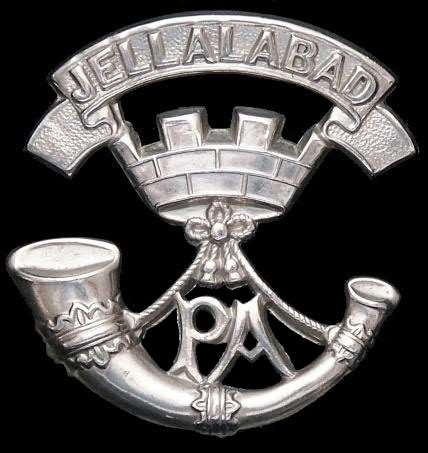
Somerset Light Infantry Cap Badge.
Illustration Credits
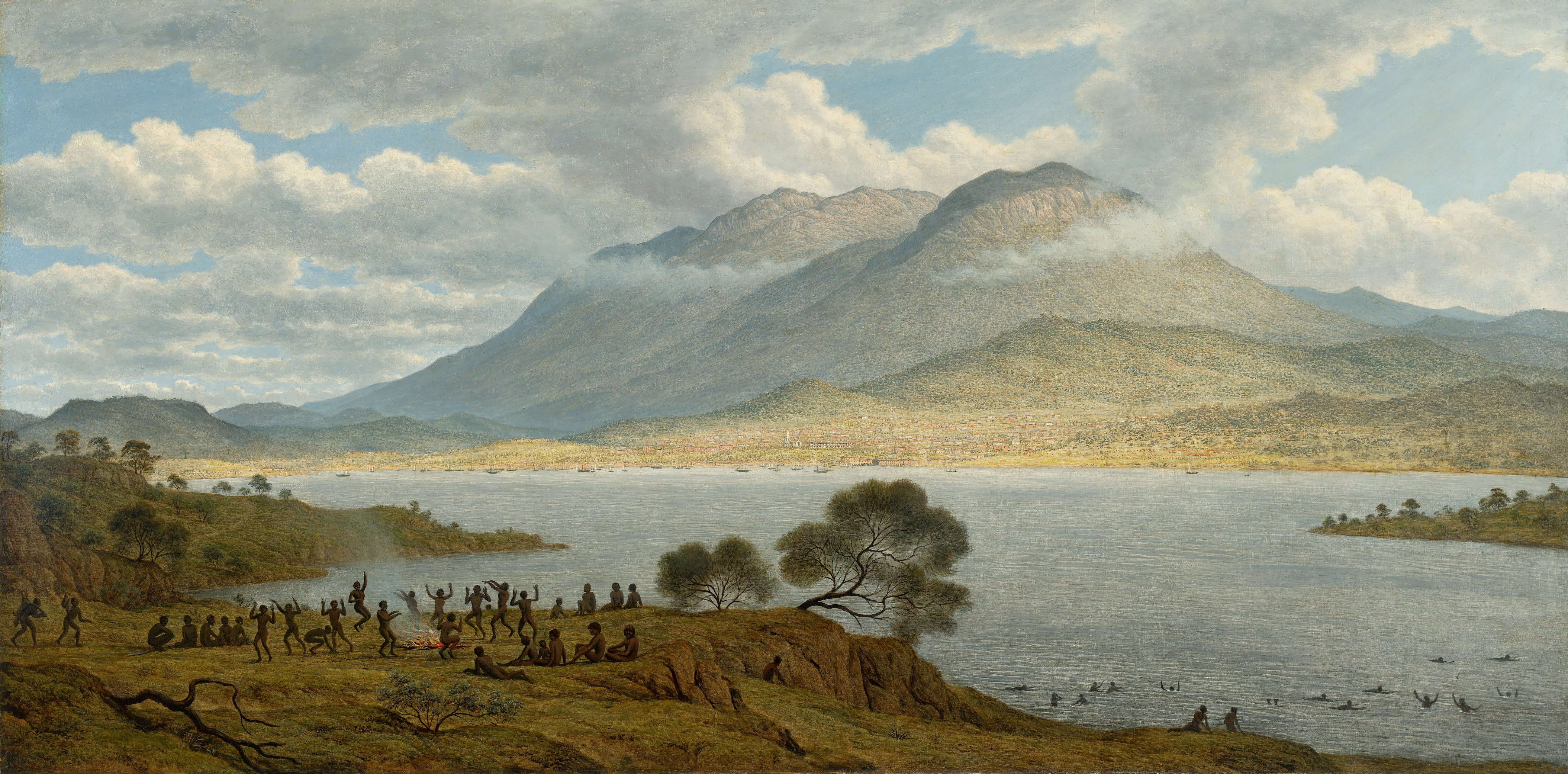
Mount Wellington and Hobart Town from Kangaroo Point by John Glover
John Glover‘s 1834 painting Mount Wellington and Hobart Town from Kangaroo Point depicts Aboriginal Tasmanians dancing in the foreground. By this stage however, Aboriginal people had been forcibly exiled from the area following the Black War.
1834. w1524 x h762 cm. Oil on canvas.
Tasmanian Museum and Art Gallery and National Gallery of Australia
https://artsandculture.google.com/asset/mount-wellington-and-hobart-town-from-kangaroo-point-john-glover/2gG0dr7EIeS9aw
Quays, Waterford, Ireland
https://www.thesocialhistorian.com/wanted-in-waterford/
Combe Grove, Bath, Somerset
https://www.wellbeingescapes.com/hotel/514/combe-grove
The Distinguished Service Order (DSO) is a British military medal
https://www.identifymedals.com/database/medals-by-period/ww1-medals/the-distinguished-service-order-medal/
Ross Bridge, Tasmania
https://www.ourtasmania.com.au/launceston/ross-bridge.html
View of Hobart Town, Van Diemens Land by J Lycett 1827
https://statelibrarynsw.tumblr.com/post/149239871578/on-this-day-21st-august-1842-hobart-town
Cascades Female Factory
https://www.ourtasmania.com.au/hobart/cascades-female.html
Damascus, Syria, 1840
Artist and engraver unknown
https://www.mediastorehouse.com/mary-evans-prints-online/syria-damascus-distant-8191203.html
Somerset Light Infantry Cap Badge.
Research Resources
THE BROTHERS FREESTUN WHY WERE WE POLICEMEN? David Freestun
References:
1 ‘Major Edmund Lockyer, Govt of Western Australia Publication ASLIB23556781B
2 AOT Shipping Index Nancy 20 March 1830
3 HTG 29 May 1830 13.179, Notice 106
4 AOT Inquests, Dorset-George Town 14 September 1839
5 AOT Inquests, Cornwall-Launceston, 4 March 1841
6 HTG 25 September 1834, p. 703, Notice 291
7 AOT R. Bourke’s despatch to Colonial Secretary 1835
8 HTG 25 June 1835, p490, 153
9 ‘Historical Records of Victoria’, Vol. 2A p.58
*1 Passage from David Freestun’s research (above)
*2 Passage from David Freestun’s research (above)
*3 AOT Inquests, Cornwall-Launceston, 4 March 1841
Cpt Humphrey May Freestun Esq (1794-1863)
https://www.priston.org.uk/2014%20HISTORY%20TALK%20ON%20THE%20VAUGHAN.pdf https://www.combedown.org/tng
https://combegrove.com/estate-history/
https://www.combedown.org › introduction › combe-d…
https://sites.rootsweb.com › ~pbtyc › Nbd › exec › Index
Surname: Freestun, First Names : Humphrey May Date promoted : Lieutenant: 02/01/1812. Rank & Seniority on Retired Lists as: Commander: 30/07/1853.
Edward Lockyer Freestun (1802-1857)
https://www.familysearch.org/en/tree/person/details/9NT3-1Z7
https://www.ourtasmania.com.au/launceston/ross-bridge.html
Charles Lockyer Freestun (1804-1879)
https://www.familysearch.org/en/tree/person/details/M9DT-V7H
https://www.abc.net.au/news/2020-05-17/cascades-female-factory-in-hobart-a-bleak-life/12227552 https://www.ourtasmania.com.au/hobart/cascades-female.html
https://www.abc.net.au/education/digibooks/the-colonisation-of-hobart/101750484
Lt Col Sir William Humphrey Lockyer Freestun KCT, KBE, KHS (1804-1862) https://www.combedown.org/tng
https://livesofthefirstworldwar.iwm.org.uk/lifestory/5315600
https://en.wikipedia.org/wiki/Egyptian%E2%80%93Ottoman_War_(1839%E2%80%931841)

 Seppings Family History