
Massacre at Satichaura ghat, Cawnpore, India 1857. After the death of Cpt Edward James Seppings, there were no direct male Seppings descendants of Sir Robert’s.
In the 1800s, Edmund Henry Seppings’ extended family branched, through marriage, into the following families: Laws, Pleasance, Beloe, Dockerill, Harrison, Turnbull, Forfar, Armstrong, Lock, Cosens, and Godfrey which produced numerous notable first cousins once and twice removed. Most were landowners who lived in grand homes with servants. Careers were as officers in the military, medical and legal practitioners, writers, artists, historians and antiquarians, clergymen, scholars and headmasters. Nine of these cousins were either children of, became one, or were married to, Sirs.
- A first cousin is the child of the parent’s siblings.
- A first cousin once removed is child of the first cousin.
- A first cousin twice removed is the grandchild of the first cousin.
Seppings – Laws families
Lydia Seppings (1762-1838) born in Fakenham, Norfolk, was adopted by her uncle Cpt John Milligen, in Plymouth, Devon, in 1780, along with her brothers Robert (Sir), and John Milligen Seppings (Edmund Henry Seppings’ father). Widowed with one daughter Ann Jewel Sampson (b. 1784), she remarried Green Laws Esq. (1768-1833) in 1790, in Fakenham, Norfolk. Their seven children were: Edward Valentine Laws (1790-1854), John Milligen Laws (1793-1797), Elizabeth Laws (1794-1878), Robert Laws (1798-1889), Mary Laws (chr. 1798), John Milligen Laws (1799-1859), and Pleasance Laws (b. 1800). They were Edmund Henry Seppings’ first cousins.
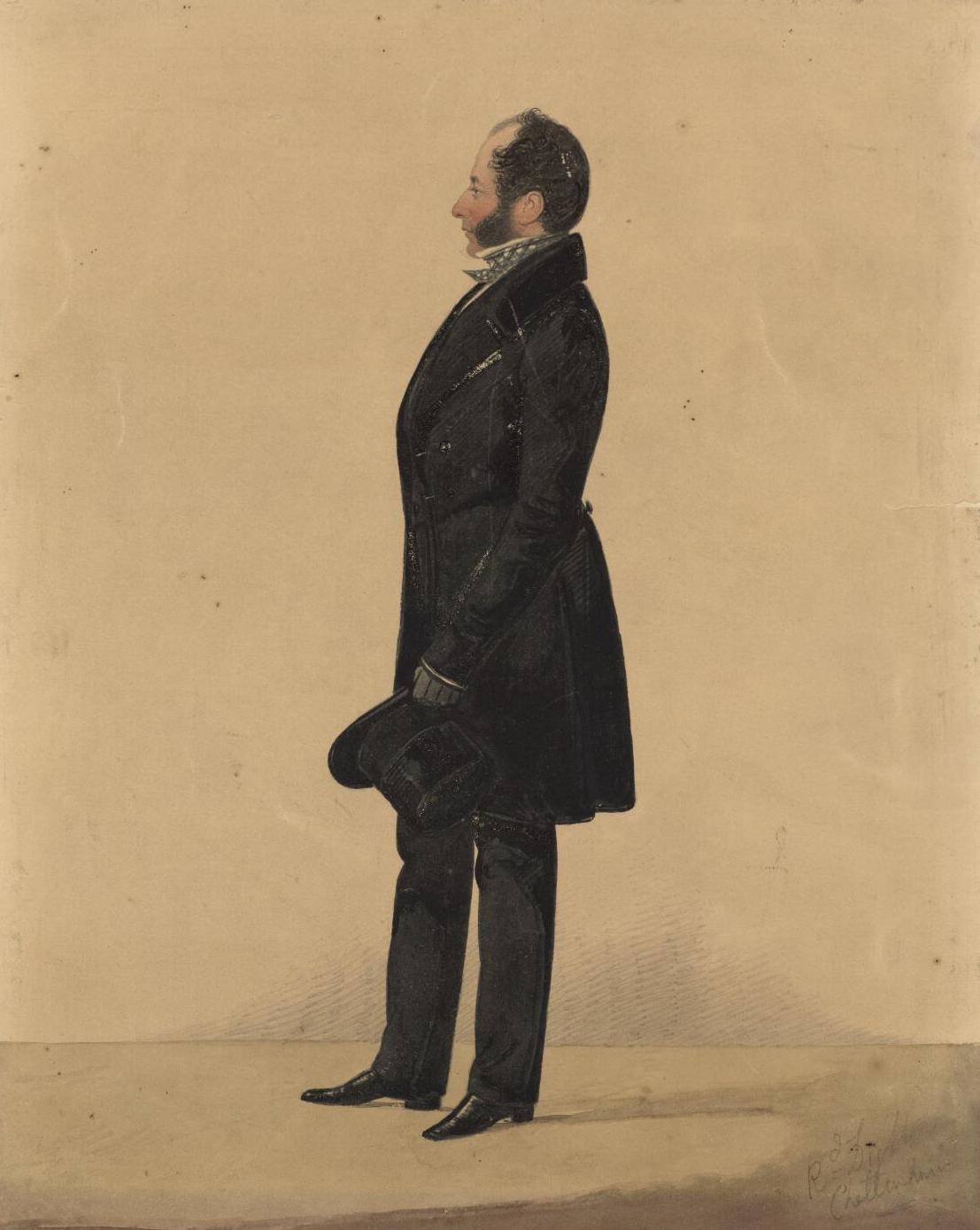
Edward Valentine Laws 1820
Edward Valentine Laws (1790-1854) born in Fakenham, Norfolk, a Naval Storekeeper, in 1821 he married Ann Mary Bunn at East Rudham, Norfolk. When Edward was at HM Dockyard, Pembroke, he had a marriage settlement with Elizabeth Griffiths (b. abt. 1839-1879) of Rochdale, Lancashire, in 1848. Offspring unknown.
Robert Laws (1798-1889), born a twin with his sister Mary, they were both baptised on 19 Feb 1798. He became a Navy Office Clerk (Storekeeper) and married Elizabeth Emma Taylor (b. 1821) at Stoke Damerel, Devon (The Dockyard), in 1841, but offspring unknown. He died at Uplands, Preston Park Avenue, Brighton, Sussex. Elizabeth lived at Hove, Sussex.
Rear Admiral John Milligen Laws (1799-1859), born in Watlington, Norfolk, married Mary Mathias (1815-1889) of Pembrokeshire, Wales, in 1836, and they had three sons – Edward George Laws (1837-1913), John Milligen Laws (1842-1928), and Mathias Robert Seppings Laws (b. 1847/8). Mary Laws was born in Wales on 5 March 1840 but died four days later. Another daughter was born in 1844, in Shepherds Bush, and died in Wales, at Tenby Norton Cottage on 6 Jun 1882, age 38.
Laws – 1st cousins once removed

Lamphey Court, Pembrokeshire, Wales
Edward George Laws (1837-1913) was born in 1837, in Lamphey Court, Lamphey, Pembrokeshire, Wales, the home of his mother’s Mathias family. A Greek revival mansion with walled gardens, glasshouses, large fish ponds, a deer park and farmland near the Bishop’s Palace ruins, his grandfather Charles Delamotte Mathias (1777-1851) built the mansion in 1823 from the profits of a Jamaica rum fortune on slave plantations which he inherited from his aunt Elizabeth. (The court was the seat of the Mathias family until sold in 1978. After restoration and extensions, it reopened as a hotel in 1980 and is now a Best Western.)
Edward was educated at Rugby and Wadham College, Oxford, where he matriculated in 1856. He joined the 35th Foot Royal Sussex Regiment, commissioned on 13 July 1858. He settled in Tenby, Wales, and was a notable public figure in Pembrokeshire for half a century, as a member of the town council (1897) and mayor of the borough (1900), a Justice of the Peace, and chairman of the Tenby bench. In 1899 he was high sheriff and was the Secretary of Tenby Museum. He devoted his time to the study of the history, culture, and archaeology of Pembrokeshire and wrote several books, including the county history, The History of Little England beyond Wales, (1888), Church Book of St. Mary the Virgin, Tenby (1907) and with assistance from Henry Owen (1844-1919), produced an An Archaeological Survey of Pembrokeshire in 1908.
Edward had a great respect for the monuments of the past and ‘set himself the formidable task of relating the story of Pembrokeshire from start to finish’ as shared in an online review by Ann Sayer ‘Papers of the Past’ (2022):
Since the eighteenth century a horrifying number of prehistoric monuments had been wantonly plundered in Pembrokeshire by dilettante antiquarians who had little or no archaeological expertise and also farmers making use of the stones for gateposts and other purposes. Laws, more enlightened than his predecessors, deplored the loss of these monuments, and in particular mourned the destruction of one four ton capstone which was blown up with gunpowder by an acquaintance, shattering the all-important cranium of the skeleton beneath. This is one of the ‘Victorianisms’ in Laws’s work. Craniums were all the rage in Victorian times, certain shapes being assigned to particular races or to certain intellectual attributes. Laws spent a great deal of time working out whether the skulls he exhumed were long-shaped i.e. ‘Silurians,’ or round, which he ascribed to the ‘Kelts’ in support of his racial theories on the peopling of Wales, but in the end gave up on the surprising discovery that the two had interbred. Laws was a perceptive observer and noted that the cromlechs and related sites scattered over Pembrokeshire are also common in those parts of Europe associated with the Iberian race.
Recounting the spread of Christianity, Laws tracks the movements of the early missionaries (now called saints) from place names and church dedications which keep their names alive today, over 1,500 years later.

Edward Laws – Archeological Survey of Pembrokeshire 1908
Edward (Bertie) George Laws married Georgina Elizabeth Nantes (1841-1897), eldest daughter of the Rev W Nantes of Frome Vowchurch, Dorset, in 1872, in East Stonehouse parish church, Devon. Edward and Georgina had three children: Elizabeth Mary Laws (1873-1881) was born and died in Norton Cottage; Edward Lucien Laws (1876-1916), and, perhaps after losing their daughter at the age of eight, they adopted Emily Hewlett Laws (b. 1878) who collaborated with Edward Laws on A Short History of the Civil War as it affected Tenby and its neighbourhood (1887), and a number of articles in Archæologia Cambrensis (1882-1906). Edward died after a fall while driving his horse and gig.
John Milligen Laws (1842-1928) born at Crumpsall Hall, Lancashire, just north of Manchester. He was with the Royal Navy briefly. He married Elizabeth Jane Rickard in 1871 in Manchester, and they had one daughter, Helen Elizabeth Milligen Laws (1873-1882) when they lived at 10 Askew Road, Hammersmith. In a letter from Elizabeth in Cheshire, to her estranged husband, of 4 Rock House, Tenby, concerning maintenance, whether she is free to marry again and ‘How is my Nelly [her daughter Helen Elizabeth Milligen Laws]? She must be a nice fine girl by now (if alive)’]. Helen died at Tenby, Pembrokeshire, when she was nine years old. John became a ‘lunatic’ in the 1880s, and was cared for at St Holloway Sanatorium, Ann’s Heath, Peckham. In 1886, there was an order in the matter of John Milligen Laws, a person of unsound mind, and the Lunacy Regulation Act 1862 & the Lunacy Regulation Amendment Act 1882. Envelope inscribed ‘For John M Laws. It is now 1889 and poor John is no better and does not seem likely to recover his mind so this may be opened by my son Edward Laws after my death. Mary Laws’, containing a letter to John M Laws dated 18 April 1885 concerning her refusal to admit her son Robert into her house. She recounts how Robert (despite being married) flirted with the parlour maid, begged his mother to provide him and his wife with lunch each day and systematically tried to poison his mother with arsenic. The letter contains evidence from the chemist who analysed the liquid and the names of the witnesses – Charles Mathias [of Waterwynch], Edith Mathias, Mary Fell and Meggy Davies.
Lt Mathias Robert Seppings Laws (b. 1847/8) was in the 62nd Foot Regiment, an infantry regiment of the British Army, commissioned on 13 Jul 1858. He would have seen service in Ireland and India, and became a lieutenant on 26 Feb 1869. There was a marriage settlement with Mlle Aurelie Emilie Bonarme in 1874. In 1888-89, there were letters from Robert in France to his mother Mary Laws reminding her that his quarterly allowance was due and accusing her of underpaying him. In one of the letters, Mrs Laws wrote ‘I do not owe Robert S Laws one penny, the debt is all on the other side.’

Crumpsall Hall
Laws – 1st cousin twice removed
Edward Lucien Laws (1876-1916) born in 4 Rock House, Tenby, Pembrokeshire, Wales, went bankrupt, and died as an army officer in Mombassa, Kenya.
Seppings – Pleasance, Beloe, Dockerill families
Helen Seppings (1765-1859), born in Fakenham, Norfolk, married Dr John Pleasance (1759-1793), and Inspector of Naval Hospitals, in 1786, at Fakenham. They later lived at Norwich. Their two surviving daughters were Elizabeth Susanna Pleasance (1786-1874) and Mary Pleasance (1789-1874), Edmund Henry Seppings’ first cousins.
Elizabeth Susanna Pleasance (1786-1874) married a tea merchant of London, Joseph Dockerill (1780) on 24 Dec 1815, Fakenham, Norfolk, and they had six children all christened in Stephney at St Mary’s, Whitechapel.
Mary Pleasance (1789-1874) married the schoolmaster at Kings Lynn, William Beloe (1791-1863), in 1816 at Fakenham. They bought a house by the sea at Hunstanton and had three sons. His students were known as ‘Beloe’s Bulldogs.’ Their children were: William Pleasance Beloe, Robert Seppings Beloe (1822-1896), Henry Beloe (1824-1894) and Edward Milligen Beloe (1827-1907).
Dockerill – 1st cousins once removed
Jane Dockerill (chr. 7 Oct 1816), James Dockerill (chr. 10 Sep 1817), Susan Eliza Dockerill (chr. 26 Jun 1820), Joseph Dockerill (chr. 28 Jun 1820), Robert Gill Dockerill (chr. 10 Sep 1824) and Ann Helen Dockerill (chr. 19 Dec 1827). Joseph Dockerill was a grocer.
Beloe – 1st cousins once removed
Rev Robert Seppings Beloe (1822-1896) was born in Kings Lynn, Norfolk, and went to Corpus Christie, Cambridge, c1840, receiving a First in Mathematical tripos in 1843. He went blind at Cambridge, but in 1846 was ordained Deacon by the Bishop of Norwich and appointed Stipendiary Curate at Walpole St Andrew. He became a priest in 1848 and was Vicar of All Saints, Kings Lynn 1850-55. A stained-glass window behind the altar at St Peter’s Church, Holton, is dedicated to him in loving memory, where he was Rector from 1855 until his death in 1896.
On 1 Apr 1850, he married Elizabeth Mary Ware (1826-1903) at Canterbury. They had 12 children (see below in 3rd cousins) including those who died as infants: Robert Seppings Beloe (1855-1857) and Douglas Seppings Beloe (1864-1864). In 1861 they lived in Holton Street, Suffolk, had two student boarders, and three house servants. In 1891, they still had three house servants.
Henry Beloe (1824-1894), an artist and photographer, possibly married a Compton, but definitely married Emma Margaret Welch (1828-1907) on 27 Sep 1855 in Caernarfonshire, Wales. They had two sons and two daughters: Henry John Gresswell Beloe (1856-1939), Emma Constance Beloe (b.1861), Charles Edward Shuttleworth Beloe (b. 1862) and Ada Beloe (b1865). He was residing in Nottingham when he died age 69 and buried at King’s Lynn St John, Norfolk.
Edward Milligen Beloe (1827-1907), a solicitor, antiquary, and coroner in King’s Lynn, Norfolk, married Lydia Dickenson (1837-1908). They had children: Edward Milligen Beloe(1871–1932), Rev John Seppings Beloe (1876-1952), and Amy Beatrice Beloe (b.1873).
Edward wrote articles for the Dictionary of National Biography, 1885-1900 by the initials EMB, such as the biography of Sir Robert Seppings. Other works included memorial brasses in Hertfordshire churches and Extracts from the Chapel Warden’s accounts (St Nicholas Chapel, King’s Lynn) from the year 1616 to the date of the restoration of His Most Sacred Majesty King Charles the Second.
Letters in the British National Archives from Edward Milligen Beloe to his son Edward, reveal that his son was also an antiquary. Family letters include ‘lively drawings of churches etc. in the Lynn area and views sketched in and near Lynn and on visits elsewhere. The drawings, beside general views of Lynn and Lynn river scenes, include – rocks etc. near Buxton and Chesterfield, a burning warehouse at Lynn docks, river and windmill at Blackborough, a window demolished by fire at Lynn Priory, Great Massingham Church, a diver at the docks, Harpley Church, Norwich Cathedral and Castle, Chesterfield Church, Bolsover Castle, Beaupre Hall, Outwell, St. Paul’s Cathedral and the Houses of Parliament, Hunstanton cliffs, a performing bear, Tilney Church, Blythford Church, Suff., piscina, Peterborough Cathedral, and his own study.
Beloe – 1st cousins twice removed
Elizabeth Middleton Beloe (1851-1931) born at King’s Lynn, Norfolk, married a war officer born in Pimlico, London, William Ord Marshall (1816-1892) in Suffolk, in 1882.
Dame Helen Mary Beloe (1852-1943) born at King’s Lynn, Norfolk, married Sir Nestor Isidore Charles Tirard (1853-1928) in 1855 at Blything, Suffolk, and had three surviving children, including Ethel Maud Mary Tirard (1886–1963) who married a doctor, William Arthur Trumper, and a son, Nestor Seppings Tirard (1891-1952), who became one. Their two other children were Christine Felicite Tirard (1889-1956), and Douglas Greville Tirard (1894-1894).
Katharine Jane Beloe (1854-1927/30) born at King’s Lynn, Norfolk, and christened at South Lynn All Saints, Norfolk, married Rev George Frederick Grace in 1895 in Blything, Suffolk.
Edith Susan Beloe (b. 1858) born at Holton, Suffolk, became a Mother Superior.
Emily Constance Beloe (1859-1894) born at King’s Lynn, Norfolk; died in Wandsworth, London.
Maud Henrietta Beloe (1861-1938) born at Holton, Suffolk, married a barrister, William Maxwell Venning (1841-1906), born in Chelsea, London, and died in Wandsworth, London. He was a Doctor of Civil Law, and secretary to a missionary society. They lived in several homes according to the censuses. In 1851, Saint Luke Chelsea, Middlesex; in 1861, Paddington, London; in 1871, Northwood, Isle of Wight, Hampshire; in 1881, Great Missenden, Buckinghamshire; in 1891, Battersea, Surrey; and in 1901, they lived in Streatham, London, and had British subject visitors from Madagascar, Africa. They had a housemaid and a cook.
Agnes Charlotte Beloe (1863-1943) born at Holton, Suffolk, was an artist.
Mabel Theodore Beloe (1865-1939) born at Holton, Suffolk, became a headmistress, and died in London.
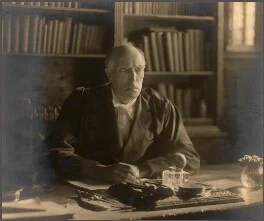
Robert Douglas Beloe
Rev Robert Douglas Beloe (1868-1931), born 12 June at Holton, Suffolk, he was a chaplain at Winchester College and headmaster at Bradfield College. He married Maragret Clarissa Branston, daughter of Rev Prebendary JT Branston, and had four children: Robert Beloe CBE (1905-1984) married Amy Rose (1911-1998), daughter of Sir Frank Rose; John Douglas Beloe (1907-1978), vicar of Woodbridge St Marys, married Mary Joan Priestly; Vice-Admiral Sir Isaac William Trant Beloe KBE, CB, DSC (1909-1966), a Royal Navy officer who became Deputy Supreme Allied Commander Atlantic, married Diana Cole; and Patrick Beloe (1914-1940), a banker.
Ethel Flora Beloe (1870-1946) born at Holton, Suffolk.
Rev John Seppings Beloe (1876-1952), a priest in 1905 at Liverpool, Rector of Boughton, Stoke Ferry, Norfolk, 1913
Edward Milligen Beloe Jr (1871-1932), a solicitor and antiquarian, married Edith A Moore and had two children: Lydia Mary Beloe (1909-1995) who married Lt Col Sir Thomas Gordon Devitt, 2nd Baronet (1902-1995) in 1937 and divorced in 1953, and had Georgina Jane Devitt (1937-2024) who married Hon Nigel Geoffrey Parker (1931-2019); and Stephen Edward Beloe.
Amy Beatrice Beloe (b.1873) aka Tottie, was born in Liverpool and married a Rye; had three sons.
Seppings – Harrison families
Martha Milligen Seppings (1796-1840), the eldest daughter of Sir Robert Seppings (1767-1840), married Major James Hull Harrison (1783-1853) in 1817 in Holborn, London. James Hull Harrison was born in Bombay, East Indies, and served in the Royal Marine artillery on board HMS Victory as a lieutenant 1808-12. He became a major in the Royal Marines of Cherbourg, France. Martha was Edmund Henry Seppings’ first cousin.
Martha and James lived at Alverstoke, Southampton; and Castle Road, Southsea, Hampshire, one of the oldest roads in Southsea, and had 11 children who were Edmund Henry Seppings’ first cousins once removed: John Seppings Harrison (b. 1818), Robert Seppings Harrison (1821-1872), Charlotte Irene Harrison (1823-1895), Edward Seppings Harrison (1824-1847), Lydia Louise Harrison (1829-1910), Helen Catherine Harrison (1831-1909), Lt Henry Laws Harrison (1833-1863), Arthur Armstrong Lock Harrison (1835-1909), Horace Sibbald Harrison (1837-1922), and Frances Harrison (b.1841 in France).
In the 1851 census, James Hull Harrison, aged 68, widower, lived at 2 Mt Pleasant Terrace, Plymouth with children: Charlotte Irene, aged 28, unmarried, Helen Catharine, aged 19, Arthur Armstrong, aged 15, Horace Sibald, aged 13, and Frances, aged 10, born in France, and two servants.
Harrison – 1st cousins once removed
John Seppings Harrison (b. 1818), christened 16 Mar 1818 in Gosport, Hampshire, a solicitor in Bradford, Yorkshire, married Marion Irving of St George’s St, Westminster, in York, Yorkshire, in 1851 and had four children: Gertrude Louisa Anna Harrison (b. 1854), Irving Henry Seppings Harrison (1856-1935), Edward Maxwell Harrison (1858-1930), and Lilias Marion Katherine Harrison (1859-1944). They lived at Draycott, Tauntfield, Gilstead Hall, Bingley and Silver St, Taunton.

Eliot Place, Blackheath, Kent
Lt Colonel Robert Seppings Harrison (1821-1872) born in Alverstoke, Southampton, Hampshire, was in the Royal Marines as a 2nd Lieut from 1838, in Light Infantry, Portsmouth Division. He served in the Syrian War as Commanding Officer at the attack on Tortosa, then in Hong Kong, and the First New Zealand War (1846) where he was present at the taking of the fortified Pah at Ruapekaapeka. He received a medal for Baltic expeditions in 1854 and 55 and after he served at the capture of Acre he received the St Jean D’Acre Medal and clasp, awarded by the Sultan of Turkey. Robert retired on full pay in 1865.
On 4 Jul 1850, he married Emily Mary Pontifex (1823-1895) in Blackheath, Lewisham, Kent, and they had three sons and six daughters including: Edmund Ponitfex Harrison (1852-1931), Reynolds Harrison (1856-1930), Annie Orfeux Laws Harrison (1860-1925); Kathleen Ada Chesterton Harrison (1854); and Emily Harrison (b. 1853).

The Bombardment and Capture of St Jean D’Acre
Lt Edward Seppings Harrison (1824-1847) christened at Saint Thomas, Portsmouth, he was a gentleman, and began his military career with the British Army, India, in 1841, with the 62nd (The Wiltshire) Regt of Foot ‘Peninsula’ Ensign, without purchase. The 62nd Foot took part in the suppression of the Bangalore Mutiny in 1832 and the First Sikh War (1845-46) at the Battle of Ferozeshah during which all its officers were killed or wounded. Edward died at Calcutta in 1847.

Night bivouac of the British Army at Ferozeshah, 21 December 1845
Lydia Louise Harrison (1829-1910) born in Southsea, and christened 26 Aug 1829, at Saint Marys, Portsea, Hampshire, may have first married Capt Warne RN, and had one daughter, Kathleen, according to Faith Packard’s history. Records show that Lydia Louise Harrison married Charles Brettingham (1829-1906) MRCS Eng; LSA London, on 6 Jul 1854 in Wells, Somerset. Born at Diss, Norfolk, in 1829, he was a surgeon (1853-1904) in the Bengal army under the Hon East India company and served in the 2nd Assam light infantry (Kamroop regiment) during the mutiny of 1857. In the 1851 census, it shows Charles, aged 21, surgeon, living at 12 Finchley Road, Hampstead, with his father Thomas Clarke Brettingham (1790- 1860), aged 61, who had been a JP in Higham, Suffolk, now a proprietor of houses; also, Charles’ sister Emma Triphena, aged 41, his sister Clara Maria, aged 34, and two servants.
In the Journal of Entymology: Descriptive and Geographical Vol I by (London: 1863) an article reveals ‘some exceedingly interesting and learned papers on the “Vernacular names of Insects,” in the Transactions of the Philological Society, received from India where they were collected by Mrs. Brettingham in the compound attached to the quarters of Charles Brettingham, Esq., in medical charge of the Kamroop Regiment of Native Infantry stationed at Dacca.”
Louise and Charles Brettingham had five children: Charles Edward Seppings Brettingham (1859-1920), Beatrice Florence Lilian Brettingham (b. 1864), Katherine Mildred Irene Brettingham (1869-1940), Henry Harrison Brettingham (1870-1937), and Lawrence Middleton Brettingham (b. 1871).
In the 1891 census at Miligan, Hallam Road, Clevedon, Somerset: Charlotte J Harrison, aged 59, unmarried, born at Brompton (Kent), Helen C Harrison, aged 51, unmarried, sister, born at Southsea (Hants), Lydia L Brettingham, aged 53, married, sister, born at Southsea, and a servant. They also lived in Tenby, Pembrokeshire, Wales, and later in Lyndhurst, Oldfield Park, Bath, Somerset, where Charles in 1906 and Louise in 1910, died. Louise, Charles, his father Thomas, and their daughter Katherine are buried together at St Mary the Virgin, Bathwick – Smallcombe Cemetery. There are memorial inscriptions and a cross on a series of four plinths.
Lt Henry Laws Harrison (1833-1863) was born in Portsmouth, Hampshire, christened 10 Jul 1833 at Saint Marys, Portsea, Hampshire, and served in the Royal Marines. He died in Tangiers.
Arthur Armstrong Lock Harrison (1835-1909) born in Southsea, Hampshire, married Mary Henning Pain in 1860 in Kensington, Middlesex, and had six children: Horace Pain Harrison (1861-1869), Hugh Seppings Harrison (1862-1864), Henry Davy Harrison (b.1864), Edna Seppings Harrison (b.1865), Martha Henning Milligen Harrison (1867-1952), and Ethel Mary Milligen Harrison (1868-1952). Arthur and Mary emigrated to Australia where he was a solicitor in Queensland (1887-1900). He died in Brisbane.
Cpt Horace Sibbald Harrison (1837-1922) was born in Portsmouth, Hampshire. A gentleman, he was to be ensign without purchase in 1855, an army captain in the 7th Foot (Royal Fusiliers) and served in Gibralta and Malta in 1857, and in Canada in 1865. He married Ellen Went Phillips (b.1841) in 1866 in Devon, but they did not have children.

Harrison – 1st cousins twice removed
Edmund Ponitfex Harrison (1852-1931) born at Plumstead Common, Kent, at the age of 19 joined the Institute of Civil Engineers (ICE) and spent the next eight years around London training. He became a member of ICE in 1879, historian and artist, moved to Johannesburg, South Africa, in the 1880s to work as a civil engineer at the Kimberley Water Works Co. He joined the Imperial Hospital Corps, became leader (1900-01) for which he received Queen’s South Africa Medal, bar Natal.
He married Emma Elvira ? (1843-1912), born in Sheffield, Yorkshire, and stayed in South Africa, when she at died at Pretoria. By 1931 he had returned to England and died in Canterbury, Kent.
Major Reynolds Harrison (1856-1930) of the 3rd Btn, Welsh Regiment married Annie Grace Bush (1861-1892) in 1878 and they had three sons and six daughters: Robert Seppings Harrison (b. 1879); Reynolds Pontifex Harrison (b. 1881), engineer; Gerard Harrison (1888-1965), a captain in the Queens regiment in WW1. Gerard married Elsie Bertha Brooks (1895-1970) and they had Mary Faith Harrison (1919-2003) who married Brigadier Joseph John Packard (1910-1993). Faith Packard, family historian, died at Tower Hamlets, the Barbican, London, in August 2003.
Kathleen Ada Chesterton Harrison (b. 1854) born in Lewisham, married French naval captain Rene Sautoy. Also recorded as marrying clergyman William Dusantoz (b. 1851) on 15 Oct 1879 at Clevedon, Somerset.
Emily Harrison (b. 1853) born in Colchester, married a barrister by the name of Leech.
Charles Edward Seppings Brettingham (1859-1920) born in Fureedpool, Bengal, India, married Marianne White Paul (1834-1913) in 1885. A physician, he appears on the Medical register 1891-1919. He died in Christchurch, Hampshire.
Seppings – Turnbull, Forfar families
John Milligen Seppings esq. (1798-1863), the only son of Sir Robert Seppings, was Inspector of Shipping, Bengal; a Surveyor H C Marine, and in the Civil Service for the Honourable East India Company Service (HEICS). He married Marianne Matthews (1796-1853) in 1821, in Bengal. They had three children, all born in Calcutta, India: Robert Seymour Seppings (1825-1881), an invalid; Cpt Edward James Seppings (1826-1857), and Charlotte Marianne Seppings (1828-1894). John Milligen Seppings esq. was Edmund Henry Seppings’ first cousin.
Seppings – 1st cousin once removed

Cpt Edward James Seppings (1826-1857) was born in Calcutta, West Bengal, India. He joined the 11th HEIC Bengal Light Cavalry in 1845, which was re-named 2nd BLC in 1850, as a pastor of the Indian Army. He married Jessie Turnbull (1826-1857) from Edinburgh, Scotland, in 20 Nov 1849 at the India Office, Umballa, Bengal; they were both age 23.
The East India Company’s factory bases had developed administration and an army in each of its three British India Presidencies: Madras, Bombay and Bengal, over a few hundred years until the India Mutiny (1857-59).
In 1857, Captain Seppings was stationed at Cawnpore (now Kanpur), Utter Pradesh, India, in cantonments on the bank of the River Ganges, 270 miles south-east from Delhi. The garrison consisted of 1,000 British troops, their families and loyal sepoys, native servants, merchants, shop keepers, etc., and other European civilians. Nearby, 60,000 Indians lived in closely packed huts and houses.
A mutiny broke out in Cawnpore in May, 1857, led by Nana Sahib (1824-59), Indian Peshwa of Maratha empire. As the adopted heir of the former Peshwa of the Mahrattas, he claimed succession which the East India Company and the Queen of England had refused to recognize. On 4 June, the Bengal Army sepoys stationed there rebelled, looted the treasury and laid siege to Major-General Sir Hugh Wheeler’s garrison. For three weeks, 300 British troops and civilians were holed up in Wheeler’s dry earthen entrenchment where they were attacked by the Nana’s army.
By 10 June, the rebel numbers had grown to 12,000-15,000 Indian soldiers. The British defended themselves against bombardment and attack, but they lacked food and water, sanitation, and a growing number of dead caused dysentery and cholera. The loss of a hospital building to fire, and medical supplies, didn’t help. During the siege, both Wheeler and Seppings wrote messages on the general’s room Masonry Barrack walls in pencil:
‘The following were in this barrack on 11th June, 1857, Captain Seppings, Mrs Seppings, 3 children, Mrs Wainwright, ditto infant, Mr Cripps, Mrs Halliday.’
By 21 June, the British had lost about a third of their men. Another major attack occurred on 23 June.
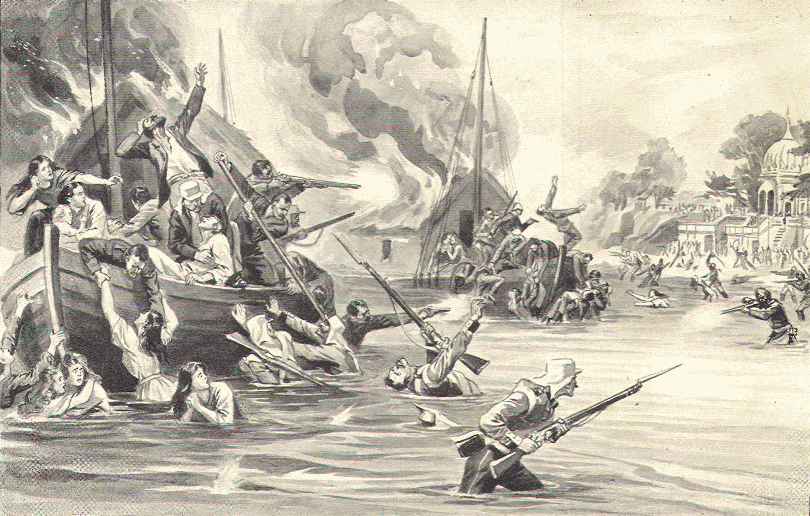
Massacre at Satichaura ghat, Cawnpore, India 1857
On 25 June, the Nana offered safe conduct to the River Ganges for all those inside the entrenchment, and boats to take them down to Allahabad. On 27 June, after Wheeler decided to surrender, and accepted a safe passage down the Ganges, the British embarked in their vessels. The boats ran aground at the Satichaura Ghat, and the Indian boatmen, instead of pushing off, jumped overboard and made for the shore. The British opened fire. The Nana’s men responded with grapeshot, a burning boat and lighted arrows. The boats filled with casualties. Edward was shot in the arms, Jessie through the thigh, and many others shot dead.
Edward and his wife were taken back to Cawnpore where the men and women were separated. The women and children were taken to a nearby dwelling known as Bibi Ghar (the House of the Ladies). Captain Seppings, known as the ‘Padre’, was asked to read prayers before the men were executed by the sepoys’ firing squad. Those wounded were finished off with swords. Edward was killed on 27 June, age 31.
Jessie and the children, John James Seppings born 1852, Edward Mathew Seppings born 1854, and a newborn son, were among 108 British women and small children, many of whom were infants, imprisoned in a small room with no facilities and little food, for three weeks. On 15 July, the women and children were butchered in what came to be known as the Bibi Ghar massacre and thrown down the well or, once nearly full, into the Ganges River, in the presence of a large crowd. It is believed that the children were still alive when thrown into the well.

The East India Company sent a large force to liberate the women and children but reached Cawnpore on 17 July. They captured the city and the rage of the British troops was just as brutal against the local population of Cawnpore.
There is a memorial to Cpt Edward James Seppings at the All Souls Memorial Church, erected on the site of General Wheeler’s entrenchment, a monument to the victims of the Cawnpore Massacre. His wife Jessie and his sons Edward and John are remembered at the Memorial Well in Nana Rao Park Memorials, in Kanpur, Uttar Pradesh, India. After Edward’s death, there were no direct male Seppings descendants of Sir Robert’s, though there are many descendants through the daughters, among them Harrisons and Beloes.
After the Mutiny, the India Act of 1858 of the English parliament, decreed the dissolution of these armies. Its European soldiers were given the option either of transferring to the British Army or of discharge with a bounty and shipment back to Europe. About 50 percent selected each option. The mutinous native regiments were disbanded but those few, who remained loyal to the British, plus loyal native irregular units, formed the basis of the new ‘Indian Army’, which continued until Independence.

The restored well at the Bibi-Ghar (the House of the Ladies). The massacre of more than 200 British women and children took place there on 15 July 1857.

The memorial erected on the site of the 1857 Bibighar massacre at Cawnpore.
Charlotte Marianne Seppings (1828-1894) married William Bentinck Forfar (1810-1895) of Redruth, Cornwall, in 1868, at Redruth, Cornwall. William, son of poet John Bentinck Forfar, was a solicitor at Helston, and then Plymouth, where he took a prominent part in public affairs, reading and lecturing at local institutions. He was one of the most noted poets and authors who wrote stories and verse in the Cornish dialect. He was the author of many popular works, mostly Cornish tales, still in publication today. He was also one of the West-Country Poets.
Seppings – Armstrong families

Mary Milligen Seppings (1799-1879), born in Plymouth, Devon, married Dr Robert Armstrong (1796-1855) on 26 Apr 1832 at St Mary’s Church, the Strand, London. They lived at Hill’s Court, Exeter, a small hamlet north of the Longbrook stream. Dr Robert Armstrong, born in Caspe, Northumberland, was a surgeon at the Plymouth Naval Hospital (1829), a Naval Surgeon, London (1832); author (1843); Inspector of Hospitals and Fleets (1847).
Mary Milligen Seppings was Edmund Henry Seppings’ first cousin therefore her children were his first cousins once removed. Mary and Robert had four children: Charlotte Milligen Armstrong (1835-1928), Robert George Armstrong (1836-1893), Catherine (Kate) Agnes Armstrong (b. 1839), and Richard Armstrong (b. 1841). All the children were born in Stonehouse, Devon, a fishing village, with a small chapel. The establishment of the Royal Naval Hospital in 1762, and of an extensive depot for the Royal Marines in 1784, brought prosperity to the place.
Armstrong – 1st cousins once removed
Charlotte Milligen Armstrong (1835-1928) born in Stonehouse, Plymouth, Devon and christened 11 April at East Stonehouse, died 28 Feb Plymouth, Devon. She married Henry Umfreville Janson (1805-1892) and had four children: Emily Mary Janson (1860-1949), Albert U Janson (b. 1864), Edward A Janson (1866-1953), and Lilian Francesca Janson (b.1869).
Robert George Armstrong (1836-1893) born in Stonehouse, Devon, died Tunbridge Wells, Kent
Catherine (Kate) Agnes Armstrong (b. 1839) born in Stonehouse, Devon.
Richard Armstrong (b. 1841) born in Stonehouse, Devon.
Seppings – Lock and Cosens families
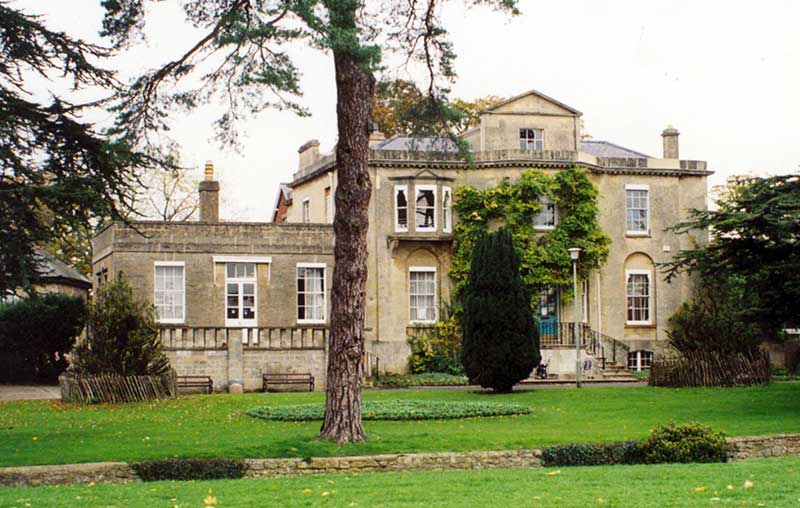
Bury Knowle House, Headington, Oxfordshire
Louisa Seppings (1810-1891), daughter of Sir Robert Seppings, married Edward Lock (1785-1859), a banker, of Halcon Lodge, West Monkton, Taunton, son of Sir Joseph Lock (1760–1844) of Oxford, at Taunton on 11 Mar 1835. Edward Lock lived at Bury Knowle House, Headington, Oxfordshire, (known then as the Mansion House) which his father had built in 1800. Joseph Lock was the only son of Edward Lock Esq, an Oxford silversmith, goldsmith, banker, a Freeman of Oxford, Chamberlain (1762), Keykeeper and Senior Bailiff (1766). In 1772, the King called in all gold coin, and Edward Lock Esq was appointed the receiver in Oxford. He was also an Aldermen, then Mayor (1776/7, 1791, 1796, 1802), and served as a ‘most active and useful’ magistrate. He was known as ‘a man of the strictest integrity’. In 1774, Joseph Lock, aged 14, was apprenticed to his father for seven years as a gold and silversmith. He grew up over his father’s shop at 7 High St, ran the shop, and became a goldsmith. In 1790 he became a banker, too, and was Mayor of Oxford in 1813 and 1829. Joseph Lock was knighted, apparently in error, by the Prince Regent when he visited Oxford in 1814.
At least five Lock children died in infancy when they lived at 6 High Street (next to the shop), so they decided to move to a country house in Iffley where their three surviving children – Edward (1785-1859), Elizabeth (b. 1793) and Maria (b. 1797) could enjoy fresher air. The enclosure award of 1801 gave Joseph Lock a large parcel of land in Headington. Joseph continued to run his shop in the High Street, and son Edward was apprenticed to his father for seven years in April 1799 at the age of 14; was admitted a Freeman of Oxford in 1806 at the age of 21; and just six years later in 1812 was described in the City Poll Book as a gentleman. By the 1820s, Sir Joseph and his family were living at Bury Knowle House. In a notice published on 26 April 1884 advertising a forthcoming three-day auction on the premises, it describes a dining, drawing, and morning room, a library, as well as six bed rooms and four attics.
At the time of the 1841 census his son Edward Lock was living in Bury Knowle House with his family, but they moved out before his sister Maria’s marriage on 11 May 1843 to George Baker Ballachey. Maria would later be a pupil of polymath John Ruskin. Many eminent people dined inside Bury Knowle House including the Bishop of Oxford, the Provost of Worcester, and the Warden of New College. Following Joseph’s death, Edward inherited the Oxford house, and Maria all the Headington property and land, and what was to become Bury Knowle House. By 1859, Edward was living at Halson Lodge, formerly Mile End House, near Taunton.
Louisa and Edward had two children: Helen Seppings Frances Lock (1836-1890), and Edward Seppings Lock (1837-1886). After the death of Edward Lock, Louisa married Rev William Du Sautoy MA (1805-1886) in 1860, the third son of James du Sautoy, an army captain and barrack master, and Governor of the Castle grounds at Taunton. His father, Pierre Francois du Sautoy, was an army officer and language teacher. In the 1871 census, Lousia and William were living Halcon Lodge in Bathpool, West Monkton with servants Lucy, housemaid, and Mary, cook. By the 1891 census, the Starkey family lived at Halcon Lodge, and Collard in the gardeners cottage.
William Du Sautoy was Vicar of Holy Trinity Church, Taunton (1859-1886) and died at Halcon Lodge, West Monkton. Louisa died at the Dudley vicarage, Worcester. The Du Sautoys are still a distinguished family in England, including Peter Du Sautoy (1912-1995), a publisher, editor and chairman of Faber & Faber publishers. Louisa Seppings was Edmund Henry Seppings first cousin. Her first husband, Edward Lock, was buried at St. Augustine Churchyard, West Monkton, Taunton.

Edward Lock’s bank 7 High St Oxford 1790s
Lock – 1st cousins once removed
Helen Seppings Frances Lock (1836-1890) married Rev William Reyner Cosens DD (1830-1906) of Dudley, Worcestershire, at West Monkton, Taunton, Somerset, on 14 July 1857. William was Rector of St Andrews, Chichester, 1855-57; then secretary to the Additional Curates Society at 39 Victoria Street, Westminster 1857-65 and Curate of Holy Trinity, Westminster 1864-70. He became Vicar of St. Thomas Church, Dudley, Worcester, 1872-90.
Helen and William had six sons and two daughters: Reyner Edward William Cosens (1858-1919), Edward Arthur Cosens MA (1860-1898), William Burrough Cosens (1861-1941), Charles Hyde Champion Cosens (b. 1863), Francis Robert Seppings Cosens (1865-1942), Sydney Dormage Thornton Cosens (b.1867), Ethel Maud Florence Cosens (1871-1941), and Amelia Georgina Helen Cosens (1873-1960).
After Helen died from injuries received from being thrown out of her carriage whilst driving, he moved, to be Rector of St. Columba’s, Crieff 1892-95. From 1895, he held the rectory of the church of St. Margaret at Moreton Say, while at Hertford College, Oxford. He was Chaplain at Hanover 1898-1905 and Chaplain at Geneva in 1903.

Edward Seppings Lock memorial 1913
Colonel Edward Seppings Lock (1837-1886) was born in Oxford, and lived at Bury Knowle House, Headington, Oxfordshire, (known then as the Mansion House) which his grandfather, Sir Joseph Lock had built in 1800. Edward was a commanding officer of the 2nd Battalion 82nd Regiment of Foot (South Lancashire Regiment), (Prince of Wales Volunteers). As a gentleman cadet at the Royal Military College, he was commissioned as a 2nd Lieutenant in 1855; promoted to Lieutenant in 1858. He served in the NW Provinces of India, involved in the suppression of the Indian Mutiny in 1858, in action at Klonkur, Shahjehanpur, Mahondee and Bunkagaon where he was awarded a medal. He was promoted to Captain in 1866, to Major in 1878, to Lieutenant Colonel in 1881 and to Colonel in 1885.
Edward married Caroline Louisa Cardew (1837-1913), born 25 July, daughter of Frederick Cardew (1808-1853) of Curry Mallet, Somerset; a gentlewoman of Staplegrove, Somerset, on 5 Oct 1859 in Taunton, at Staplegrove. Frederick Cardew was in the HETC Civil Service and died in Allahabad, Bengal. In 1835, he married Caroline Louisa Anstruther at Muzzafferpore, Bengal India. Their son, Colonel Sir Frederic Cardew, KCMG (1839 – 1921) was a British Army officer and colonial governor. He was Governor of Sierra Leone from 1894 to 1900. The hut tax that he introduced led to the Hut Tax War of 1898. Caroline Louisa Cardew was born in Jessore, Bengal, India.
Edward and Caroline were in India in the first years of the British Raj with the Indian Rebellion having just ended in 1858. They returned to England in 1865, the journey taking them from October until December 27. According to Faith Packard, all their seven children were born in Taunton. Their home was at 12 Mountlands, Taunton. She records their children as: John Lock (b.1860), Harriet Lock (b.1861, died young), Thomas Lock (b. 1863), Mary Ann Lock (b. 1865), James Richard Lock (b. 1867), Harriet Lock (b.1869) and Matilda Lock (b. 1871). However, records show they had thirteen children of different names, listed below under 3rd Cousins.
Caroline Louisa Lock kept a collection of diaries from 1865-1872, beginning in January in Lahore, India, where Lt Edward Lock of the 82nd regiment was stationed. She also kept five notebooks, labeled in gold on the spines: Visits & Addresses, Memoranda, Daily Journal, Personal Expenses, and Cash Account. Much of her recordings were daily chitchat, with reference to the Bury Knowle House family home, and military life including the Bengal Cavalry. According to the Census of 1841, they lived in Curry Mallet, Somerset; in 1851 at Taunton, Somerset, and in 1881, at Warrington, Lancashire. Caroline was with Edward when he died aged 49 of enteric fever whilst commanding the regiment in Natal on 10 December 1886, in Grey’s Hospital, Pietermaritzburg, Natal, Cape Colony. In 1891, Caroline was living in Taunton, widowed. She was buried in Falmouth, Cornwall.
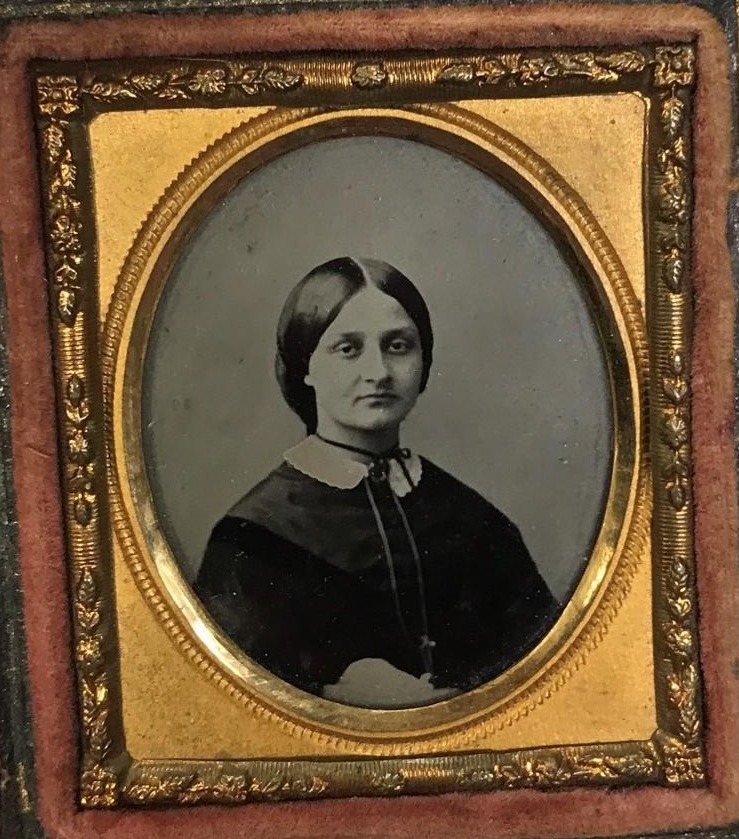
Caroline Louisa Lock 1859
Cosens – 1st cousins twice removed
Rev Reyner Edward William Cosens (1858-1919), the eldest, born at Binstead, on the Isle of Wight, married Emily Williams on 15 June 1882 at Tividale, Worcestershire. They had two children: William Reyner Hyde Cosens (b. 1883) and Mary Helen Hyde Cosens (1884-1940). Reyner was a minister in the US 1891-97. He lived in Chadlington, Oxfordshire in 1901. From 1904 he was Rector of Stoke under Hamdon in Somerset. He lived in Chester, Cheshire, in 1911.
Rev Edward Arthur Cosens MA (1860-1898), born 1860, the second son, studied at Kings College school, London, and Merton, was the Curate of St Barnabas, Oxford 1887-88; was Vicar of St Augustine’s, Holly Hall, Dudley, Worcester, 1888-97; and St. Mylor’s Church, Falmouth, Cornwall, from 1897-98.

The Gables, Dorchester
Dr William Burrough Cosens MD JP (1861-1941) was born 12 November 1861 at Notting Hill, Kensington, London. In 1871 he moved with his parents and siblings to live in the Vicarage at Dudley in Worcestershire. He trained to be a surgeon and in 1881 was still with his family at Dudley as a medical student. He gained his MRCS and LRCP qualifications in London in 1887 at London Hospitaland established his medical practice at Church Square in Taunton where he was also Hon. Surgeon & House Surgeon at the Taunton & Somerset Hospital.
William married Edith Annie Hinks (1866-1945) on 1 July 1891 at her parish church All Saints in Leamington Priors in Warwickshire.In late 1895, William moved his practice to Dorchester and they lived at 50 High West Street. They had two daughters: Barbara Cosens (1896-1979) and Joan Cosens (1904-). The 1901 Census shows they had moved to live at The Gables, No 9 Albert Road, Dorchester.
During WW1, William was a Major in the Royal Army Medical Corps and Kellys Street Directory for Dorchester for 1915 shows that he also became the Borough Magistrate for Dorset & Dorchester, and was serving as Hon. Surgeon at the Dorset County Hospital in Princess Street. Medical Directories also show that he was Hon. Cons. Surgeon Mental Hospital; Hon. Med Ref Hospital for Consumption Ventnor; Med. Ref. Ministry of Pensions; Admiralty Referee; Med Ref Workmans Compensation Act; FRIPH; Late Hon. Medical Officer i/c & Hon. Surgeon Dorchester Auxil War Hospitals; Clinical Assistant Hospital for Children Great Ormund Street London; and Senior House Surgeon London Temp Hospital. William was also an author of ‘Method of reducing dislocations of Shoulder Joint’, BM Journal 1918; ‘Reflex Phenomena produced by Commencing Abdominal Hernia’, Pract 1918; ‘Pseudo Acute Abdomen caused by temporary increase of Arterial Tension’ ib; ‘Observation of cause and treatment of Abdominal Hernia’; Ic 1920; ‘Notes case of Idiopathic Tetanus Recovery’, Lancet 1919; and ‘Certain Renal Storms & their Interpretation’, Ib 1922.
By the end of September 1939, he had retired and moved to live at Durlston Cottage in Worthing, Sussex with his wife Edith and eldest daughter.
Charles Hyde Champion Cosens MRCS, christened in 1863 in Notting Hill, was a surgeon and Member of the British Medical Association; a clinical assistant and assistant in Skin Department, London Hospital in the late 1880s. Charles married Florence Ada Hinks (1868-1959) on 3 Jun 1980 at St Mark, New Milverton, Birmingham, Warwickshire, and they had two daughters: Florence (Dorothy) Helen Cosens (1892-1957) and Elsie Joyce Cosens (b. 1898).
Dr Francis Robert Seppings Cosens (1865-1942) was born in Westminster, London, and married Ettie Harriet Howat (b. 1896) in 1896 at Dudley, Staffordshire. They had two children: Marjorie Cosens (1897-1988) and Francis Roy Seppings Cousins (1900-1942).
Ethel Maud Florence Cosens (1871-1941) born in Dudley, Worcestershire, married Howard Cochrane Jobson (1850-1901) on 17 Jul 1988 at Saint Mark, Milverton, Warwickshire. They had two children: Robert Howard Jobson (1892-1944) and Frances Lilas Maud Jobson (1895-1986).
Lock – 1st cousins twice removed
Edward Lock (1860-) born 12 June in Bengal, India; christened 11 Aug 1860 Bengal, India.
Louisa Caroline Lock (1861-1899) born 2 Oct, in Delhi, India; christened 24 Dec 1861 Bengal, India, married James Neville Thompson (1864-1946) 7 Nov 1887 at Taunton Holy Trinity, Somerset.
Lucy Helen Seppings Lock (1863–1864) born 30 Apr, in Bengal, India; christened 3 Jun 1863 Subathoo, Bengal, India; died 23 May 1864 India.
Edward Seppings Lock (1864–1865) born 20 Aug, in Bengal, India; christened 10 Sep 1864 Subathoo, Bengal, India; died 16 May 1864 age 8 months, in Dharamsala, Kangra District, Himachal Pradesh, India.
Ruth Marion Lock (1866–1951) born Plomesgate, Suffolk; married George Fortescue (1868-1923); died New Hampshire, US.
Frederick Robert Edward Lock (b. 1867) christened 30 May at Brompton, Kent.
Lionel John Lock (b.1868) born Chatham, Kent.
Mabel Clara Lock (1870–1948) christened 21 Sep 1870 St Jude, Southsea, Hampshire; married John Codner (1857-1923) 17 Aug 1892 Taunton, Somerset and had three children: John Edward Seppings Codner (1893-1969), Christopher Cardew Codner (1894-1917), and Phyllis Mary Codner (1895-1912); died Somerset.
Ernest Seppings Cardew Lock (1871–1935) born Headington, Oxfordshire; died Somerset.
Kathleen Mary Anstruther Lock (1874–1947) christened 2 Jul 1873 Brompton, Kent; died Somerset.
Christopher Airay Lock (1874–1930) born 26 Jul Falmouth, Cornwall; married Lucy Doroty Spencer (1867-1963) 22 Jun 1896 at Pasco, Florida, US; died Wade City, Pasco, Florida, US of a fractured skull in a head-on automobile collision on a public highway; bur. 6 Jul 1930 Wade City, Pasco, Florida, US.
Richard Masefield Lock (1876–1947) christened 15 Jun 1876 St Alkmund, Shrewsbury, Shropshire; married Grace Spencer (1874-1968) 6 Jan 1897 Pasco, Florida, US; died Pinellas, Florida, US.
Francis Octavieus Lock (b.1878) christened 16 Jun 1878 St Alkmund, Shrewsbury, Shropshire.
Seppings – Godfrey families
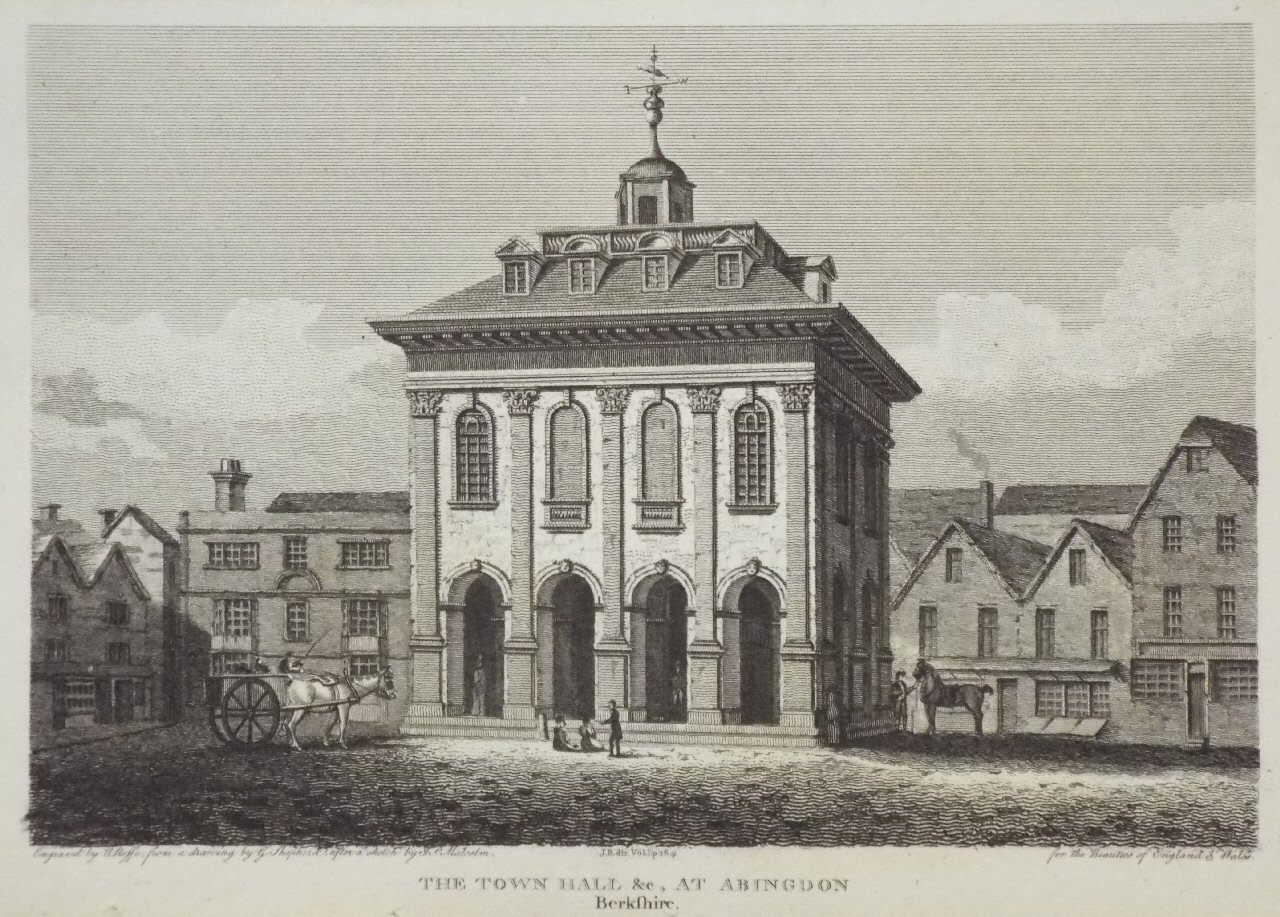
Helen Milligen Seppings (b. 1812) married Daniel Godfrey (1799-1877) from Witney, Oxfordshire, in 1837, a solicitor of Abingdon, Berkshire. Daniel was the town clerk and Clerk of the Peace for the Borough from 1835 to 1877. His business partner was George Bowes Morland (1808-1878). They had two sons and five surviving daughters: Louisa Helen Godfrey (1837–1886), Elizabeth Milligen Godfrey (1839-1914), Charlotte Emma Godfrey (b. 1840), Robert Seppings Godfrey (1842-1906), Edward Crotch Godfrey (1844-1916), Catherine Susan Godfrey (b. 1847), Mary Fanny Godfrey (1851-1906), and Georgina Frances Godfrey (1854-1928).
In the 1851 Census, it shows that in their home at Abingdon St Helen, Berkshire, they had a cook and two housemaids, a footman, a groom, and a governess. On Daniel’s death, at the church of St Michael and All Angels on Park Road, the reredos, of freestone and marble, was donated in his memory by his family. ‘Lock and Godfrey’ were a stonemasons’ business at 35 East St Helen Street, Abingdon. The Locks and Godfreys were cousins.
Godfrey – 1st cousins once removed
Elizabeth Milligen Godfrey (1839-1914) born in Abingdon, Berkshire, married Rev Charles Lawford Acland (1834-1903), on 14 April 1868. Rev Charles Lawford Acland was the headmaster of Colchester Grammar School 1870-1892; vicar of All Saints’, Cambridge 1892-1903. They had seven children born in Colchester, Essex: Charlotte Harriette Helen Acland (b.1871), Robert Lawford Acland (1872-1937), Mary Elizabeth Acland (1874-1960), Godfrey William Acland (1876-1877), Maud Emily Acland (1878-1915), Edith Catherine Acland (b.1880), and Charles Stuart Acland (1881-1951).
The 1881 census shows the family living at Colchester St Mary at The Walls, with Charles as the Schoolmaster in Holy Orders. Built against Roman Walls and overlooking the south western corner of the old walled town of Colchester, the church has a significant history. On 2 August 1557, six protestants were burnt at the stake by the old Roman walls, next to the church. During the English Civil War, the church tower was used as a gun emplacement by the Royalist army, which had a clear view of where the Parliamentary forces were camped. On 14 July 1648, the Parliamentary cannons fired on the tower of St Mary’s for several hours. Heavy cannon balls smashed into the church and the tower was in ruins. The gunner was killed as the canon and tower came down. This event has been linked by some to the nursery rhyme Humpty Dumpty. Humpty Dumpty was a large cannon used from the town walls, which ‘had a big fall’. The town fell under Parliamentarian control, who won the Civil War in 1649.
Robert Seppings Godfrey (1842-1906) born in Abingdon, Berkshire, went to Radley College in 1857 and married Emily Frances Radcliffe (1845-1922) in 1868 at Cheltenham, Gloucestershire. In 1877, Robert worked in the Chancery Registrar’s Office, Chancery lane, Middlesex, and the Registrar of the Supreme Court of Judicature (Chancery Division) 1886-1906, London.
They had three children: Alice Louise Godfrey (1868-1940), Horace Radcliffe Seppings Godfrey (1873-1947), and Ethel Houlton Godfrey (1875-1957). Robert died 16 Nov 1906 in Kensington, London.
Edward Crotch Godfrey (1844-1916) born in Abingdon, Berkshire, went to Radley College and was a solicitor. He died on the Isle of Wight.
Catherine Susan Godfrey (b.1847) born in Abingdon, Berkshire, married Rev Robert Frederick Ramsay (1843-1920), of Gloucestershire, in 1873 in Abingdon, Berkshire. In 1891, they were living in Burnham, Buckinghamshire, with their three children: Edith Helen Rumsey (1875-1944), Mary Rumsey (1882-1960), and Henry St John Rumsey (1884-1972), and a governess, cook, nurse, and parlour maid.
Georgina Frances Godfrey (1854-1928) born in Abingdon, Berkshire, married Capt George Cecil Thomas Thorne (b.1858) of Exmouth, Devon, on 28 Apr 1883 in Chelsea, London. In the census of 1891 and 1901, they were living in St George Hanover Square, Westminster, London.

The Court of Chancery in the early 19th century
Godfrey – 1st cousins twice removed
Mary Elizabeth Acland (1874-1960) married Lt Col Alexander Braithwaite Morgan (1867-1930), born in West Bengal, India. They had one child, Mary Alexander Morgan (b.1897). In 1911, they were living in Milverton, Warwickshire.
Maud Emily Acland (1878-1915) married Rev Robert Holmes Edleston (1868-1952) in 1899, Westminster, London. Robert was a vicar in Gainford, County Durham, and son of Rev Joseph Edleston, MA LLD. He was also a landowner, author, and an antiquary of County Durham with significant Cambridgeshire and Huntingdonshire connections, living in Jesus Lane Cambridge and Buckden Tower. ‘He was a somewhat exotic figure, a supporter of the Old Catholic church and rejoicing in the title of Baron de Montalbo, granted by the Republic of San Marino in gratitude for his acting as consul for the republic in Newcaste-on-Tyne. He also purchased the lordships and accompanying records of many manors’, and deposited substantial records at the Durham County Record Office.
Robert Holmes Edleston wrote the following books: Letters from Rome 1903, with illustrations from photographs by the writer; Napoléon III, and Italy: A Brief Historical Survey 1830-1860, Bailey 1908.

The Polish Prince, Paul Salvator Riedelski-Piast (left) was good friends with Robert Holmes Edleston (right)
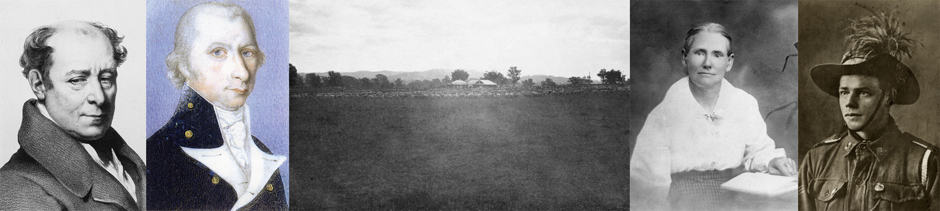
Part 7 of ‘The Age of Sail’ looks at more of Lt Edmund Henry Seppings’ extended family.
Illustration Credits
The treacherous massacre of English women and children at Cawnpore by Nena Sahib, 1857
Tinted lithograph by T Packer, published by Stannard and Dixon, 7 Poland St, London, 12 October 1857.
‘Cawnpore was a major crossing point on the River Ganges, and an important junction, where the Grand Trunk Road and the road from Jhansi to Lucknow crossed. In June 1857, during the Indian Mutiny (1857-1859), the Bengal Army sepoys stationed there rebelled, looted the treasury and laid siege to Major-General Sir Hugh Wheeler’s garrison.
Wheeler retreated to a dry earthen entrenchment just outside the city.’
https://collection.nam.ac.uk/detail.php?acc=1988-07-54-1
‘On 25 June, the leader of the rebels, Nana Sahib, offered safe conduct to the River Ganges for all those inside the entrenchment, and boats to take them down to Allahabad. Wheeler accepted, and two days later the Europeans marched out towards the landing stage (shown here). As they embarked in their vessels, a shot was heard. The Indian boatmen, instead of pushing off, jumped overboard and made for the shore. Fearful of treachery, the British immediately opened fire. The Nana’s men replied with grapeshot and the boats were soon full of casualties. Most of the 60 men who survived the short battle were immediately killed by the Nana’s troops. Wheeler was among the dead.
Despite the title of the work and its depiction of females being slain, most of the women and children survived the attack. They were kept as hostages in the days that followed, but were eventually killed in another, far more notorious massacre.’
NAM Accession Number 1971-02-33-106-1
National Army Museum, Study collection
https://collection.nam.ac.uk/detail.php?acc=1971-02-33-106-1
Edward Valentine Laws (1790-1854)
A portrait of Edward Valentine Laws by Richard Dighton (1795-1880) from the Welsh Portrait Collection at the National Library of Wales, 1820
1st Storekeeper of Dockyard at Pembroke Dock; Trustee for the Bush Estates, Pembroke; nephew of Sir R. Seppings
https://www.wikidata.org/wiki/Q55005853
Edward George Laws (1837-1913)
Lamphey Court, Pembrokeshire, Wales
https://www.lampheycourt.co.uk/
Archaeological Survey of Pembrokeshire 1896-1907 inside front cover
https://www.peoplescollection.wales/items/13011#
John Milligen Laws (1842-1928)
Crumpsall Hall from Views of the Old Hall, Nathaniel G Philips
https://100hallsaroundmanchester.wordpress.com/2020/09/12/100-halls-around-manchester-part-11-crumpsall-hall/
Lt Colonel Robert Seppings Harrison (1821-1872)
Eliot Place, Blackheath, Kent
‘Eliot Place, a row of detached and semi-detached houses on the edge of the Heath, was built between 1795 and 1802. It survives intact except for No. 9, which was rebuilt in 1911. Benjamin Disraeli went to school there and a blue plaque records the residence of Sir James Clark Ross, the polar explorer, at No.2. The part of the Heath opposite became a semi-private playing field for the boarding schools in Eliot Place. Engraving published by Rock & Co, 11th August 1864’
Pontifex_Emily_Eliot Place_Blackheath_LEW_PH-81-10618-1024×616
https://boroughphotos.org/lewisham/eliot-place-blackheath-lewisham-3/
The Bombardment and Capture of St Jean D’Acre by Henry Martens (-1854), Harris John III (1811-1865) published 1848
https://en.wikipedia.org/wiki/Oriental_Crisis_of_1840#/media/File:The_Bombardment_and_Capture_of_St_Jean_D’Acre_RMG_PAH8189_7019.jpg
https://www.kingslynn-forums.co.uk/viewtopic.php?f=14&t=1877&start=15
Lt Edward Seppings Harrison (1824-1847)
Night bivouac of the British Army at Ferozeshah, 21 December 1845
Coloured aquatint by J Harris after H Martens from a sketch by Maj G F White, 31st Regiment, published by Rudolph Ackermann, 1 December 1848.
During the First Sikh War (1845-1846) on 21 December 1845, a British Indian force commanded by General Sir Hugh Gough encountered a Sikh army of around 40,000 troops led by General Lal Singh in an entrenched position at Ferozeshah. Gough’s 18,000 strong force attacked the defences and by evening only part of them had been taken. A renewed assault the following morning forced the Sikhs out, but at heavy cost to the British.
NAM Accession Number 1971-02-33-165-1
National Army Museum, London
National Army Museum, Study collection
https://collection.nam.ac.uk/detail.php?acc=1971-02-33-165-1
Cpt Horace Sibbald Harrison (1837-1922)
The Royal Fuzileers 7th Regiment of Foot 1812-16
British; 7th Regiment of Foot(Royal Fuzileers), Lieutenants, Field Officer, Fuzileer & Colour-Sergeant, 1812-16. https://uk.pinterest.com/pin/481181541429067414/
Cpt Edward James Seppings (1826-1857)
Edward James Seppings https://www.britishempire.co.uk/forces/2blcseppings.htm
Massacre at Satichaura ghat, Cawnpore, India 1857
The Baldwin Project – Heroes of the Indian Mutiny 1841-1915 by Edward Gilliat published 1922
https://tornosindia.com/escape-to-massacre-satichaura-ghat-cawnpore-1857/
Cawnpore well, 1857
Indian Mutiny &Massacre at Cawnpore.-William Jonah Shepherd (civil servant) A Brief Account of the Outbreak at Cawnpore and the disasters which resulted therefrom to the Christian Community of the Station, original manuscript account, 1857.
THE INDIAN MUTINY 1857-1859 (Q 80542) Aftermath of the Siege of Cawnpore, showing the restored well at the Bibi-Ghar (the House of the Ladies). The massacre of more than 200 British women and children which took place there on 15th July 1857 was one of the worst atrocities of the Mutiny. Copyright: © IWM. Original Source: http://www.iwm.org.uk/collections/item/object/205022426
Rev Robert Douglas Beloe (1868-1931)
Robert Douglas Beloe
by Walter Benington, for Elliott & Fry
chlorobromide print, circa 1930
image size: 149 mm x 178 mm
Purchased, 1996
Photographs Collection
NPG x90645
Louisa Seppings (1810-1891) and Edward Lock (1785-1859)
Bury Knowle House, Headington, Oxfordshire
https://www.headington.org.uk/history/listed_buildings/buryknowle.htm
Taunton: Halcon Lodge, Huish Close, Somerset Archive Catalogue https://somerset.epexio.com/records/D/DC/TAU.D/24/2/26
Edward Lock’s bank 7 High St Oxford 1790s
http://www.oxfordhistory.org.uk/mayors/1714_1835/lock_edward_1776_1806.html
Colonel Edward Seppings Lock (1837-1886)
Edward Seppings Lock memorial 1913
https://www.findagrave.com/memorial/71759120/edward-seppings-lock
Caroline Louisa Lock 1859
Caroline Louisa Lock ambrotype_cropped_1859
https://fisher.library.utoronto.ca/fisher-blog/diaries-caroline-louisa-lock
Dr William Burrough Cosens MD JP (1861-1941)
The Gables, Dorchester
https://themovemarket.com/tools/propertyprices/flat-5-the-gables-albert-road-dorchester-dt1-1sg
Daniel Godfrey (1799-1877)
The Town Hall &c, at Abingdon Berkshire
Artist: Malcolm J P, Engraver: Shepherd G
Print Series: Beauties of England & Wales
Copper plate engraving 106 x 154mm
http://www.rareoldprints.com/p/14058
Robert Seppings Godfrey (1842-1906)
The Court of Chancery in the early 19th century, sitting in Lincoln’s Inn Old Hall
By Thomas Rowlandson (1756–1827) and Augustus Charles Pugin (1762–1832) (after) John Bluck (fl. 1791–1819), Joseph Constantine Stadler (fl. 1780–1812), Thomas Sutherland (1785–1838), J. Hill, and Harraden (aquatint engravers) – Unknown source, Public Domain, https://commons.wikimedia.org/w/index.php?curid=587644https://en.wikipedia.org/wiki/Court_of_Chancery#/media/File:Microcosm_of_London_Plate_022_-_Court_of_Chancery,_Lincoln’s_Inn_Hall_edited.jpg
http://www.rareoldprints.com/p/14058
Rev Robert Holmes Edleston (1868-1952)
The Polish Prince, Paul Salvator Riedelski-Piast and Robert Holmes Edleston https://www.thenorthernecho.co.uk/news/16336432.talk-focus-fascinating-wartime-friendship/
Research Resources
Our Family History Faith Packard (1989)
Seppings – Laws families
Edward George Laws (1837-1913)
https://www.parksandgardens.org/places/lamphey-court
Charles, B. G., (1959). LAWS, EDWARD (1837 – 1913), historian of Pembrokeshire,. Dictionary of Welsh Biography. Retrieved 9 Nov 2024, from https://biography.wales/article/s- LAWS-EDW-1837
https://biography.wales/pdf/s-LAWS-EDW-1837.pdf
PAPERS FROM THE PAST
A NEW SERIES LOOKING AT SIGNIFICANT BOOKS ABOUT PEMBROKESHIRE
The History of Little England Beyond Wales
by Edward Laws (1837-1913)
A Review by Ann Sayer
https://www.pembrokeshirehistoricalsociety.co.uk/papers-from-the-past-2/
https://biography.wales/article/s-MATH-LLW-1617
https://archive.org/stream/cu31924027921372/cu31924027921372_djvu.txt
https://coflein.gov.uk/en/site/22219/ (with map)
Cadw/ICOMOS Register of Parks and Gardens of Special Historic Interest in Wales
https://en.wikipedia.org/wiki/Lamphey_Court
https://www.parksandgardens.org/places/lamphey-court
John Milligen Laws (1842-1928) https://en.wikisource.org/wiki/A_Naval_Biographical_Dictionary/Laws,_John_Milligen
http://archiver.rootsweb.ancestry.com/th/read/MARINERS/2010-05/1274697994
https://freepages.rootsweb.com/~lawsfamilyregister/genealogy/
https://sites.rootsweb.com/~pbtyc/18-1900/S/04138.html
https://en.wikisource.org/wiki/Royal_Naval_Biography/Laws,_John_Milligan
https://arrow.latrobe.edu.au/store/3/4/9/2/5/public/B13858427S3V6pages721-933&backcover.pdf
Monmouthshire Merlin 26th April 1845, Page 2 https://newspapers.library.wales/view/3425060/3425062
https://records.pembrokeshire.gov.uk/calmview/TreeBrowse.aspx?src=CalmView.Catalog&field=RefNo&key=D-EE%2F57
https://100hallsaroundmanchester.wordpress.com/2020/09/12/100-halls-around-manchester-part-11-crumpsall-hall/
https://records.pembrokeshire.gov.uk/CalmView/record/catalog/D-EE/57/61
https://records.pembrokeshire.gov.uk/calmview/Record.aspx
Lt Mathias Robert Seppings Laws (b. 1847/8)
https://digital.nls.uk/british-military-lists/archive/105724470?mode=transcription
Seppings – Pleasance, Beloe, Dockerill families
Edward Milligen Beloe (1827–1907)
Dictionary of National Biography, 1885-1900 https://discovery.nationalarchives.gov.uk/details/r/5f9f7758-258f-4979-8f4c-0a40b16cf6b0
Edward Milligen Beloe Jr (1871–1932)
Lydia Mary Beloe. https://www.wikidata.org/wiki/Q75870184
https://www.geni.com/family-tree/index/6000000055915437829
https://en.wikipedia.org/wiki/William_Beloe_(Royal_Navy_officer)
Seppings – Harrison families
Major James Hull Harrison (1783-1853)
https://www.gutenberg.org/files/53360/53360-h/53360-h.htm
https://www.outlookindia.com/website/story/commemorating-1857-the-role-of-the-bengal-army-in-the-first-war-of-independence/299066
https://en.wikisource.org/wiki/Neale,_Harry_Burrard_(DNB00)
Lt Colonel Robert Seppings Harrison (1821-1872)
https://boroughphotos.org/lewisham/eliot-place-blackheath-lewisham-3/
https://www.bonhams.com/auction/20809/lot/286/pair-to-colonel-rsharrison-royal-marines/
http://www.charsbrokenbranches.com/Family_Tree/WC11/WC11_221.htmhttps://www.liverpoolmedals.com/product/qsa-natal-imp-hospital-corps-leader
Lydia Louise Harrison (1829-1910)
https://www.batharchives.co.uk/sites/www.bathvenues.co.uk/files/2022-07/SMV%2520Section%2520D%2520Rows%2520A-Ha_0.pdf
https://discovery.nationalarchives.gov.uk/details/record?catid=-2968569&catln=7
Charles Edward Seppings Brettingham (1859-1920)
https://familyrelatives.com/search/data_medical_register_midwives.php?page=5134&fn
Seppings – Turnbull, Forfar families
Cpt Edward James Seppings (1826-1857)
https://www.rct.uk/collection/2918761/the-cawnpore-memorial-the-royal-tour-of-india-1905-06
https://www.britishempire.co.uk/forces/2blcseppings.htm
https://www.heritage-history.com/index.php?c=read&author=gilliat&book=mutiny&readAll=true
https://military-history.fandom.com/wiki/62nd_(Wiltshire)_Regiment_of_Foot
https://en.wikipedia.org/wiki/62nd_(Wiltshire)_Regiment_of_Foot
https://wiki.fibis.org/w/62nd_Regiment_of_Foot
https://wiki.fibis.org/w/East_India_Company_Army
https://archive.org/stream/listofinscriptio00blunrich/listofinscriptio00blunrich_djvu.txt
https://wiki.fibis.org/w/Presidencies
https://glosters.tripod.com/IM5.htm (THE BENGAL CAVALRY)
William Bentinck Forfar
https://www.victorianresearch.org/atcl/show_author.php?aid=3464
https://www.goodreads.com/book/show/21950841-the-wizard-of-west-penwith-a-tale-of-the-land-s-end
https://www.davidlay.co.uk/auction/lot/2-mining-interest-forfar-william-bentinck/
https://archive.org/stream/westcountrypoets00wrigrich/westcountrypoets00wrigrich_djvu.txt
Seppings – Armstrong families
https://www.oldtowns.co.uk/Devon/stonehouse.htm
Seppings – Lock and Cosens families
Louisa Seppings (1810-1891) and Edward Lock (1785-1859)
https://somerset.epexio.com/records/DD/CH/129/9
https://freepages.rootsweb.com/~sarahhawkins/genealogy/1871_census_bathpool_west_monkton.htm
GM1859-Obits1859.pdf victorianvoices.net
https://fisher.library.utoronto.ca/fisher-blog/diaries-caroline-louisa-lock https://www.dominicwinter.co.uk/Auction/Lot/360-lock-family-diaries/?lot=15197&sd=1 https://www.forumauctions.co.uk/167/Anglo-Indian-diaries.-Lock-Caroline-Louisa-maiden-name-Cardew-wife-of-Colonel-Edward-Sepp/10082-91_1/1
https://www.findagrave.com/memorial/71759120/edward-seppings-lock
https://www.findagrave.com/memorial/221886047/edward-seppings-lock
https://www.headington.org.uk/history/listed_buildings/buryknowle.htm
https://www.headington.org.uk/history/misc/buryknowlepark.html
https://historicengland.org.uk/listing/the-list/list-entry/1123722
https://www.headington.org.uk/history/famous_people/lock.htm
https://oxfordhistory.org.uk/mayors/1714_1835/lock_edward_1776_1806.html
https://www.genuki.org.uk/big/eng/OXF/Oxford/oxford_st_clement
Dr William Burrough Cosens MD JP (1861-1941)
Sources: Marriage Cert 1891 on Ancestry.com; Census Returns:1871; 1881; 1891; 1901; 1911; 1939; The Medical Directory 1910; 1915; 1920; 1925; Kellys Directory of Dorchester 1915 Borough Magistrate & Dorset County Hosp; Probate Calendar 1941
https://www.opcdorset.org/fordingtondorset/Files/MedicalDirectories.html
Charles Hyde Champion Cosens
https://archive.org/stream/register00schogoog/register00schogoog_djvu.txt
Edward Arthur Cosens
https://en.m.wikisource.org/wiki/Page:Oxford_men_and_their_colleges.djvu/596
Colonel Edward Seppings Lock (1837-1886)
https://www.wikitree.com/wiki/Cardew-52
https://www.geni.com/people/Caroline-Louisa-Cardew/6000000030631520602
https://fisher.library.utoronto.ca/fisher-blog/diaries-caroline-louisa-lock
https://www.familysearch.org/en/tree/person/details/G635-57B
https://www.familysearch.org/ark:/61903/1:1:6DM2-HWV6
https://www.dominicwinter.co.uk/Auction/Lot/360-lock-family-diaries/?lot=15197&sd=1
https://www.forumauctions.co.uk/167/Anglo-Indian-diaries.-Lock-Caroline-Louisa-maiden-name-Cardew-wife-of-Colonel-Edward-Sepp/10082-91_1/1
https://www.findagrave.com/memorial/71759120/edward-seppings-lock
https://www.findagrave.com/memorial/221886047/edward-seppings-lock
https://www.familysearch.org/en/tree/person/details/KHP7-HWJ
https://www.familysearch.org/en/tree/pedigree/landscape/LYN2-8NP
Seppings – Godfrey families
Robert Seppings Godfrey (1842-1906)
https://www.kenphillips.org.uk/FamHistData2-o/p289.htm#i32639
https://radleyarchives.co.uk/browse/college-registers/register-1847-1962/1787-register-1847-1962-30jpg
https://sogdata.org.uk/bin/aps_browse_sources.php
https://www.abingdon.gov.uk/abingdon_people/george-bowes-morland
https://www.abingdon.gov.uk/abingdon_buildings/st-michael-and-all-angels-church#_ednref25
https://www.abingdon.gov.uk/abingdon_people/albert-edward-lock
https://www.thegazette.co.uk/London/issue/24669/page/246/data.pdf
https://artvee.com/dl/s-w-view-of-st-helens-church-abingdon-berkshire/
Elizabeth Milligen Godfrey (1839-1914)
https://www.nationalchurchestrust.org/church/st-mary-walls-colchester
Maud Emily Acland (1878-1915) and Rev Robert Holmes Edleston (1868-1952)
https://discovery.nationalarchives.gov.uk/details/r/defcf6ae-133e-4de0-b62d-9ce2a4814635
https://www.thenorthernecho.co.uk/news/16336432.talk-focus-fascinating-wartime-friendship/

 Seppings Family History

